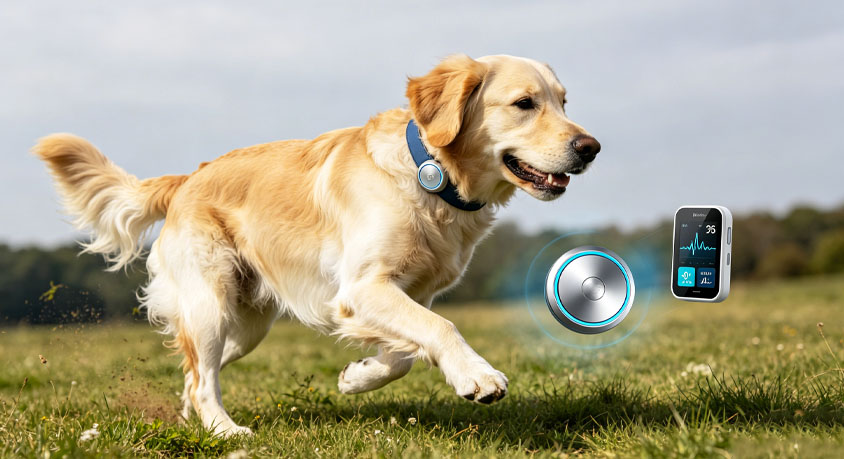
There is a particular silence that follows a dog slipping through a gate left ajar. It is not the sound of running or barking. It is the absence of the usual cues—the jingle of tags, the scratch at the door, the familiar weight leaning against your leg. By the time most owners realize their pet is gone, the animal has already traveled a surprising distance. A 2022 survey conducted by pet microchip registries in the United States found that nearly one in three pet owners reported losing their dog at least once, and of those, roughly half experienced more than one escape. The conventional solutions—a microchip, a tag with a phone number—rely on someone else finding the animal and initiating contact. But those solutions operate on the assumption that the loss will be noticed immediately and that the finder will act. Neither assumption holds reliably.
This is where the first function of a smart collar diverges from traditional identification. A collar equipped with GPS and cellular connectivity does not wait to be found. It broadcasts the animal’s location continuously, often updating every few seconds to minute depending on the model and network conditions. The owner receives a notification the moment the dog leaves a defined geofence—the property boundary, the park perimeter, the radius around a campsite. The window between escape and awareness collapses from hours to seconds. Data from manufacturers of these devices indicate that recovery times for lost pets drop from an average of several days to under an hour when owners are alerted in real time and can track the animal’s movement. The device does not replace the microchip. It solves a different problem: the gap between the escape and the moment someone realizes the escape occurred.
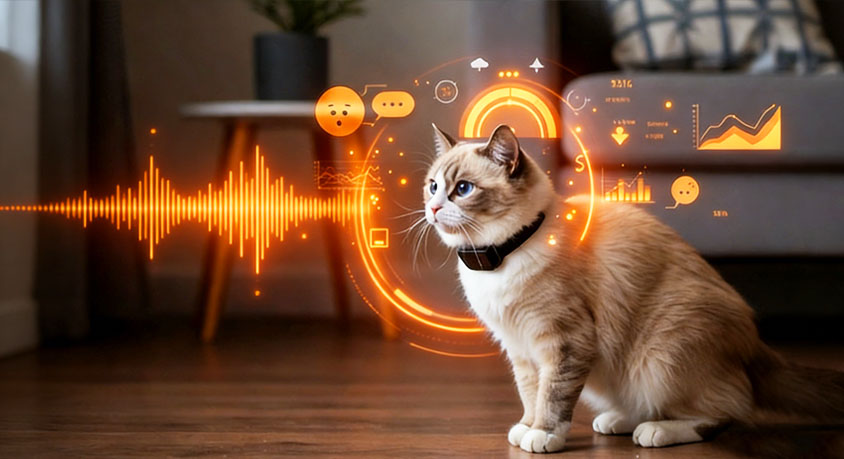
But the more interesting capability of modern smart collars lies in a domain most owners never think about until something goes wrong. A dog’s resting heart rate, respiratory rate, and activity patterns change subtly long before clinical symptoms of illness appear. In veterinary medicine, conditions like dilated cardiomyopathy—a common heart disease in certain breeds—often present with few outward signs until the disease is advanced. A dog may seem slightly less eager for walks, may sleep a few minutes longer each day. These changes are easily dismissed as aging or mood. An accelerometer and optical heart rate sensor worn continuously against the neck can detect deviations from the animal’s baseline that are imperceptible to an owner. A resting heart rate that rises by 15 percent over a week, a decline in nighttime activity, a shift in the duration of sleep cycles—these are not diagnoses, but they are signals that warrant a conversation with a veterinarian.
The underlying logic here mirrors what continuous glucose monitors did for diabetes management in humans. Single-point measurements taken at a veterinary visit capture only a snapshot. But a dog’s physiology fluctuates throughout the day based on stress, activity, feeding schedule, and sleep quality. A collar that records data 24 hours a day builds a longitudinal profile that distinguishes normal variation from meaningful deviation. A study published in the Journal of Veterinary Internal Medicine in 2023 examined data from over 1,200 dogs wearing activity monitors and found that machine learning models trained on baseline activity patterns could predict the onset of mobility-related health issues with approximately 80 percent accuracy up to two weeks before owners reported observable symptoms. The collar does not replace the veterinarian. It changes what the veterinarian has to work with.
There is a broader question embedded in this technology about the nature of caregiving. Most pet owners operate in a reactive mode. Something happens—the dog escapes, the dog collapses, the dog stops eating—and then action follows. A smart collar shifts the model toward continuous, passive observation. The owner does not need to remember to check anything. The system alerts only when a parameter moves outside a predetermined range. The alert for an escaped dog is immediate. The alert for a resting heart rate that has climbed above baseline for three consecutive days is a different kind of signal—not an emergency, but a suggestion to schedule a checkup before an emergency develops.
The design constraints of these devices are worth acknowledging. GPS tracking consumes battery. A collar that updates location every few seconds will require charging every day or two, creating a new routine for the owner. Collars that prioritize battery life may update less frequently, creating a tradeoff between real-time tracking and convenience. Optical heart rate sensors on moving animals face challenges with motion artifact, particularly during vigorous activity, and accuracy varies across breeds with different coat thicknesses and neck anatomies. The most sophisticated devices combine accelerometer data with optical sensors to filter out movement noise, but no consumer-grade collar achieves clinical-grade precision during high-intensity exercise.
What these devices do achieve, however, is a shift in the information available to the owner and the veterinarian. The collar that alerts you to a garden gate left open is the same collar that quietly builds a record of how your dog moves through the world. That record becomes useful not only in the moment of crisis but in the long arc of the animal’s life. A veterinarian looking at a dog with a new limp has more context if they can see that the animal’s activity levels have been declining gradually for weeks rather than dropping sharply in a single incident. A cardiologist evaluating a murmur can distinguish between an acute change and a pattern that has been stable for months.
The collar is not a medical device. It does not diagnose. It does not treat. But it solves a problem that has no other good solution: how to observe an animal that cannot tell you how it feels, in the places where it spends most of its time, without requiring it to perform for a measurement. The dog wears the collar and forgets it is there. The collar watches quietly. And when something changes, it does not ask the dog to explain. It simply tells you that something has shifted.
Disclaimer: Mention of any brand or trademark is for identification only and does not imply partnership or endorsement