
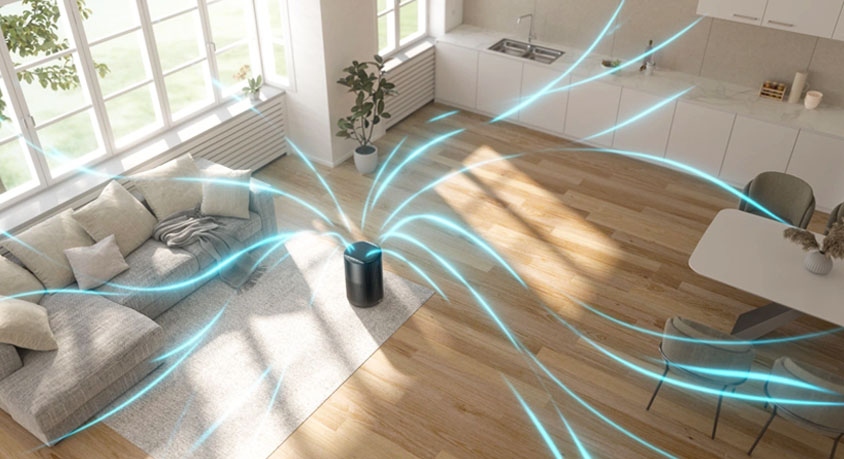
There is a pattern in how homes across Southeast Asia are equipped. Walk into any apartment in Bangkok, Singapore, or Jakarta, and you will likely find an air conditioner in every bedroom, a standing fan in the living room, and perhaps a standalone air purifier tucked into a corner that gets used only when the haze season arrives. The assumption underlying this arrangement is that comfort is a matter of brute force: more cooling, more air movement, occasional filtration. But what if the problem is not insufficient hardware, but the lack of coordination between the hardware you already own? The discomfort you feel is rarely because the room is simply too hot. It is because the temperature, the humidity, the airflow, and the particulate level are all being managed by devices that do not talk to each other, operated by you making reactive decisions throughout the day.
Consider the midday scenario. The sun hits the west-facing wall of a condo unit. The temperature rises. The air conditioner kicks in, cooling the space but recirculating the same indoor air. The PM2.5 level, unnoticed, begins to creep upward from cooking next door or traffic outside. By the time you notice the stuffiness, you have already been breathing suboptimal air for hours. The conventional solution is to buy a dedicated air quality monitor, check it periodically, and manually turn on the purifier. But that approach misses the point. The goal is not to collect more data. It is to eliminate the need for you to act on that data.
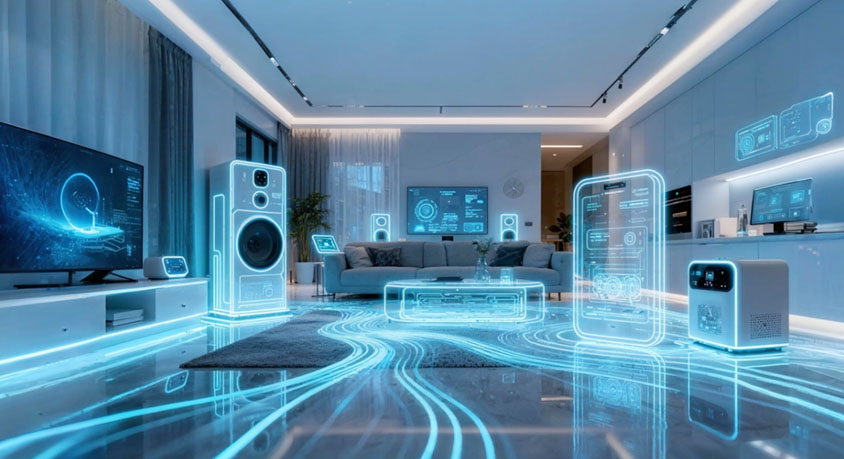
This is where a different class of IoT devices becomes relevant, not as standalone gadgets but as a lightweight automation layer over existing appliances. A smart plug, costing roughly the same as a meal delivery, can turn any conventional fan or purifier into a responsive device. Pair that with a modest air quality sensor that detects particulate matter, volatile organic compounds, or humidity shifts, and you establish a simple rule: when PM2.5 exceeds a threshold, the purifier runs until the air clears; when the room temperature crosses 29 degrees Celsius with no motion detected, the fan circulates air rather than letting the AC bear the full load. These are not futuristic scenarios. They are conditional statements, no different from setting a thermostat, applied to the devices that already occupy your floor space.
The engineering principle at work here is often misunderstood. People assume that smart home automation is about remote control—turning things on and off from a phone. But remote control still requires a human decision. The actual efficiency gain comes from shifting from reactive control to state-based automation. A fan does not need to run continuously; it needs to run when the combination of temperature, occupancy, and time of day meets a specific condition. An air purifier does not need to be on all day; it needs to be on when particle concentration exceeds a baseline and off when the air is clean, conserving filter life and electricity. In tropical climates where both cooling and air quality fluctuate hour by hour, this distinction is not a luxury. It is the difference between a home that demands constant attention and one that manages its own environment.
Data from Thailand’s pollution monitoring agencies shows that PM2.5 levels in urban areas can vary by a factor of three within a single day, often peaking during evening hours when cooking and traffic coincide. Running a purifier at noon, when outdoor air is relatively clean and windows are sealed for cooling, wastes energy. Running it only during the evening spike, without remembering to check a dashboard, requires automation. Similarly, studies on thermal comfort in tropical high-rise buildings indicate that ceiling fans can reduce perceived temperature by 2 to 3 degrees Celsius, allowing thermostats to be set higher and cutting air conditioning energy use by 15 to 25 percent. But this only works if the fan operates in sync with occupancy and temperature thresholds, not as a manual afterthought.
The overlooked opportunity is that most households in the region already possess the heavy machinery—the fans, the purifiers, the air conditioners. What they lack is the connective tissue. A sensor costing under forty dollars and a handful of smart plugs costing less than a dinner out can transform a collection of dumb appliances into a coordinated system. The fan in the bedroom can run for thirty minutes after you leave for work to clear out residual heat from the morning sun, then stop. The purifier in the living room can activate when the sensor detects the spike that follows the evening commute. The air conditioner can be set to a higher temperature, knowing that the fan will handle the remaining cooling load when someone is present.
There is a deeper assumption worth questioning here. The smart home industry, particularly in Western markets, has long framed automation around voice control and scheduled routines. But in a tropical environment where conditions change with the monsoon, the afternoon sun, and shifting urban pollution, a static schedule is insufficient. The environment itself must become the trigger. This is not about controlling your home from your phone while sitting on the couch. It is about designing a set of rules so that the home responds to its own conditions without requiring your attention at all.
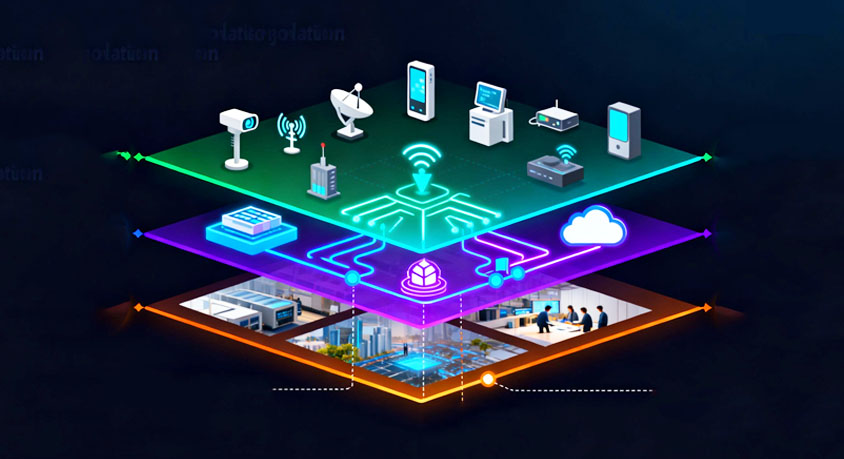
The three pieces—a sensor, a smart plug, a fan or purifier you already own—form a closed loop. Measurement, decision, actuation. That loop is the fundamental unit of a useful smart home, not the number of connected devices in an app. When applied to the specific constraints of Southeast Asian urban living, this approach does not just add convenience. It addresses the chronic mismatch between fixed appliances and variable environments. The result is not a futuristic showpiece. It is simply a home that feels less like a collection of machines you have to manage and more like a space that stays comfortable and breathable on its own.
Disclaimer: Mention of any brand or trademark is for identification only and does not imply partnership or endorsement