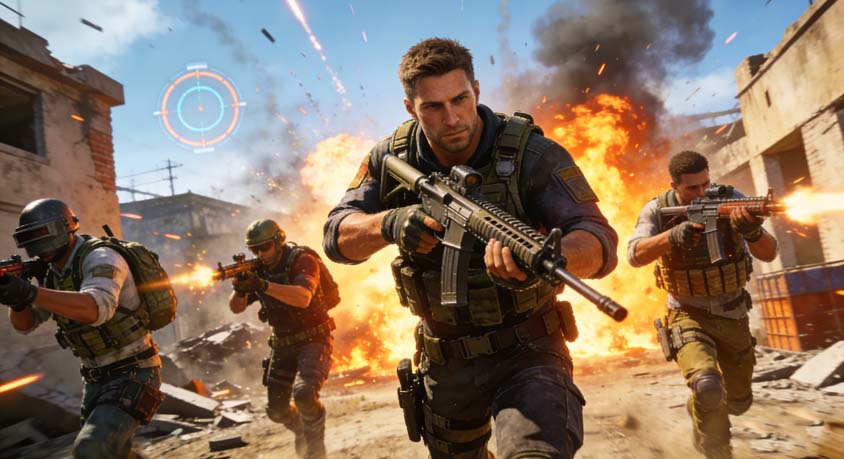
You’ve dropped into Erangel a hundred times. You know the loot spawns, the vehicle routes, the exact pixel where a sniper’s bullet turns your level three helmet into a decoration. And yet, you keep finishing 37th. You blame your aim. You blame the guy with the iPad who can see you from across the military base. You blame the lag, the ping, the fact that your thumbs weren’t designed for this. Here’s the truth no one tells you: aiming is maybe 20 percent of this game. The other 80 percent is knowing where not to be. PUBG Mobile isn’t a shooter. It’s a chess match played with circles, sound cues, and the slow, creeping realization that the best fight is the one you never take.
The genius of PUBG Mobile, the thing that has kept it alive while other battle royales faded, is its refusal to hold your hand. No aim assist that locks onto heads. No glowing outlines of enemies behind walls. No radar pinging footsteps from three buildings away. You hear a shot, you have to guess where it came from. You see movement in a window, you have to decide if it’s a player or a shadow. The game trusts you to be smarter than it is, and most players fail that trust spectacularly. They run across open fields because they’re bored of hiding. They shoot at every moving target because they think kills equal skill. They die. They blame the game. The game was just being honest.
Let’s talk about the real mechanics that separate the 37th place from the chicken dinner. Sound is your primary sense. Not vision. Not radar. Sound. Every action in PUBG Mobile makes noise: opening doors, reloading, switching weapons, bandaging, even aiming down sights if you’re close enough. A player who wears headphones can hear you loot a crate from two houses away. They can hear which direction you’re facing, whether you’re on wood or concrete, whether you’re alone or with a squad. Most players treat sound as background noise. The winners treat sound as a map. You don’t need to see the enemy if you can hear them opening that bathroom door in Pochinki. You just need to be on the other side of the wall, shotgun ready, waiting for them to walk into your patience.
Then there’s the circle. The circle isn’t an enemy. It’s a tool. Bad players panic when the zone starts moving. They run straight toward the safe area, through open ground, directly into the sights of everyone who got there early. Good players let the circle push the enemies toward them. They position on the edge, using the blue as a wall. No one can shoot you from behind if the circle is eating them. No one can flank you if the zone is burning their path. The circle is the most powerful weapon in the game, and most players treat it like a deadline.
Vehicles are another overlooked mechanic. They’re not just for travel. A well-parked car is cover. A flipped car is a trap. A car driving straight at you is a distraction. The engine noise masks footsteps. The dust it kicks up hides movement. Players who know how to use vehicles don’t just drive to the next compound. They drive to confuse, to split squads, to make the enemy think they’re running when they’re actually circling around for the flank. A car without a driver is still useful. Leave it running near a door. The enemy will hear it, assume someone’s inside, and waste their grenades on an empty vehicle while you watch from the hill.
The loot system deserves its own confession. You don’t need an AWM and a ghillie suit to win. You need a weapon that shoots straight and enough meds to outlast the circle. Most players spend ten minutes looting, then die in their first fight with a backpack full of attachments they never used. The winner is the player who grabs a decent AR, two first aid kits, and starts moving toward the center while everyone else is still fighting over the supply drop. Gear is a trap. Confidence is a trap. The only thing that matters is positioning and patience.
This game isn’t for everyone. It’s for people who enjoy the slow burn, the tension of not knowing, the small victory of hearing footsteps stop right before a door opens. It’s for players who don’t need constant action, who find satisfaction in outthinking an opponent instead of outshooting them. It’s for the patient, the observant, the people who understand that running toward gunfire is how you die, and running away is how you live to fight another circle.
Disclaimer: Mention of any brand or trademark is for identification only and does not imply partnership or endorsement