
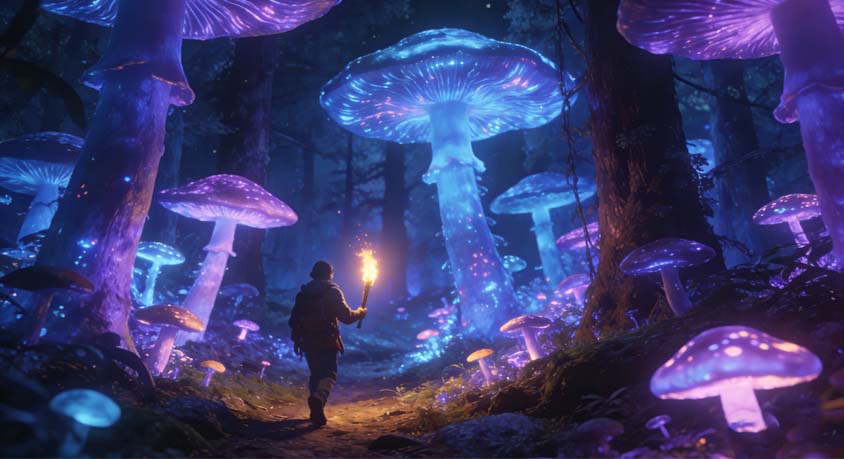
Let’s set the scene: You wake up in a dense, creepy forest, plane crashed, friends missing, and the only sound is the distant howl of something that definitely isn’t a deer. For the first few hours of The Forest (and its sequel, Sons of the Forest), you’re prey—scrambling to collect sticks before dusk, cowering in a rickety lean-to as wild-eyed cannibals bang on the walls, and sprinting for your life when they give chase. Then you build a proper cabin. Add a palisade wall. String up some spike traps. Suddenly, the tables turn: Now it’s the cannibals running from you, and that log cabin? It’s not just shelter—it’s a warzone. This is the genius of The Forest series: it turns “building a house” into one of the most satisfying power trips in gaming, where every nail hammered is a step from victim to ruler of the woods.
The magic isn’t just in stacking logs—it’s in how building doubles as tactical warfare. Your first lean-to is a panic move, thrown together to avoid freezing or getting eaten. But once you graduate to a proper base with reinforced walls, you’re not just surviving—you’re planning. You’ll position spike traps at chokepoints, build watchtowers to spot raids early, and even dig moats to slow down attackers. Want to split a group of cannibals? Build a maze of walls that funnels them into your waiting club. Tired of nighttime raids? String up torchlights to blind them, then pick them off one by one. The Forest doesn’t just let you build—its forces you to think like a general, turning your base into a weapon. And when a pack of cannibals charges your walls only to impale themselves on your traps? That rush of “I built this, and it works” is better than any loot drop.
What makes this power shift so addictive is how gradual and earned it feels. You don’t unlock a “god mode” base overnight; you grind for resources, learn from failures (RIP that first cabin that got burned to the ground), and adapt. You’ll spend hours chopping trees, hauling logs, and scavenging for rope—all while looking over your shoulder for threats. But every upgrade feels like a victory: adding a second floor lets you rain rocks on attackers, installing a door with a lock means you can sleep without fear, and building a storage shed means you’re no longer scrambling for supplies mid-raid. By the time you’re running a fortified compound with traps, gardens, and even a small army of companions (looking at you, Kelvin), you’re not just surviving the forest—you’re taming it.
The Forest series also nails the balance between terror and triumph. Even when you’re a seasoned builder, the forest never stops feeling dangerous. Cannibals learn your traps, bigger and scarier mutants emerge at night, and a well-timed raid can still leave your base in shambles. But that’s part of the fun: it keeps you on your toes, forcing you to iterate on your defenses. You’ll laugh when a cannibal faceplants into your spike trap, swear when a mutant smashes through your wall, and cheer when you rebuild stronger. Unlike survival games where building feels like a chore, here it’s a game of cat-and-mouse—you’re the cat, and the forest’s inhabitants are your very skittish mice.
In a genre saturated with “build to survive” games, The Forest and Sons of the Forest stand out by making building feel like a form of empowerment. It’s not just about having a roof over your head; it’s about taking control of a world that tried to kill you. You’ll start the game shaking in your boots, hiding from every rustle in the trees. By the end, you’ll be standing on your cabin’s roof, watching cannibals flee at the sight of you, and thinking, “This is my forest now.” It’s a power trip that’s equal parts satisfying and hilarious—especially when you accidentally trap yourself in your own spike pit (we’ve all been there).
Disclaimer: Mention of any brand or trademark is for identification only and does not imply partnership or endorsement