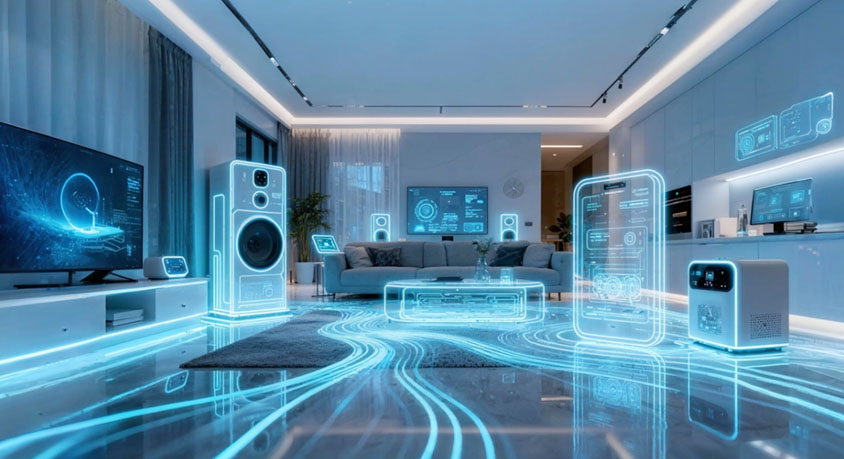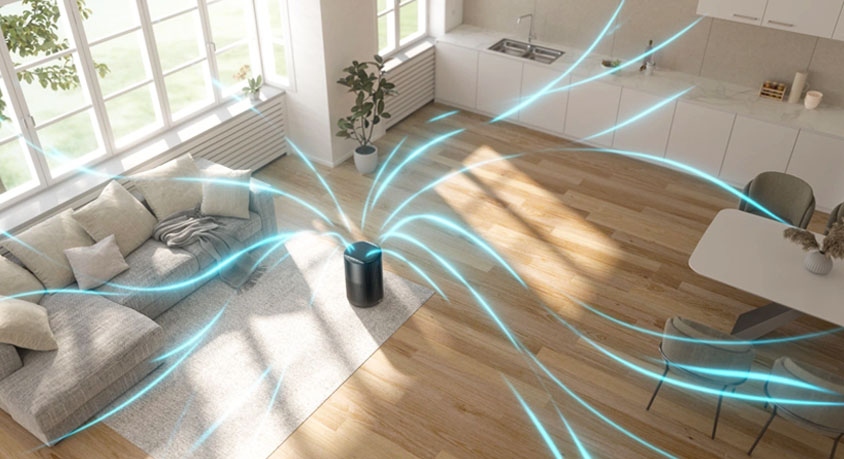

You sit down at a coffee shop, and your phone, now at 23% battery, begins charging. No cord, no pad. A transmitter embedded in the ceiling has identified your device and is sending a focused beam of energy directly to it, much like a Wi-Fi router sends data. This is true far-field wireless power, moving beyond inductive mats into the realm of over-the-air delivery. Companies like Energous and WiTricity are pushing this from lab to limited commercial deployment in 2026. The convenience is revolutionary: an end to the tether. The immediate, practical question is not about the physics, but about the side effects: what happens to the energy that misses its target, and what does this new, persistent energy field do to the other electronics—and biology—in the room?
The core technology operates in two primary camps. The first is magnetic resonance, which uses tuned coils to create a coupled magnetic field over short to medium distances (up to a few meters). Think of it as creating an invisible, energy-filled bubble between two specifically matched devices. The second, more disruptive method for room-scale power is radio frequency (RF) power harvesting. Here, the transmitter acts like a miniature, intelligent power broadcaster. It uses beamforming—an array of antennas that shape and steer RF waves—to focus energy on a specific device's receiver. Your phone isn't passively soaking up ambient power; it's being actively targeted by an invisible energy spotlight. The efficiency is poor compared to a wire, but the trade-off for mobility is the selling point.
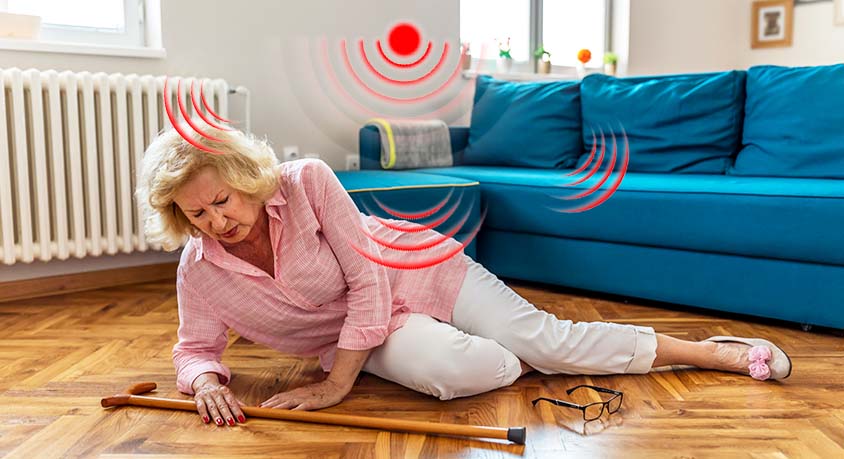
This introduces the issue of spillover and coexistence. The focused beam is not a perfect laser. Energy scatters. The frequencies used (typically in the 900 MHz, 2.4 GHz, or 5.8 GHz bands) are shared with Wi-Fi, Bluetooth, and other communication protocols. A powerful, dedicated power transmitter can act like a noisy neighbor on a shared radio street, causing interference that degrades your Wi-Fi signal or disrupts other sensitive IoT devices. More critically, for individuals with active medical implants like pacemakers or insulin pumps, unintended exposure to strong RF fields, even if within regulatory limits, is a non-trivial concern. While manufacturers design systems to comply with FCC limits for human exposure (Specific Absorption Rate - SAR), these standards are based on continuous, whole-body exposure models, not targeted beams intermittently scanning a room.
The safety and interference profile is therefore a function of power, focus, and intelligence. A dumb, high-power broadcaster flooding a room with RF energy is hazardous and disruptive. An intelligent system using precise beamforming, presence detection, and adaptive frequency hopping to avoid crowded channels is the necessary engineering answer. The device should transmit meaningful power only when a compatible receiver is verified in its sightline and should cease transmission the moment charging is complete or the receiver leaves the area. This on-demand, targeted approach minimizes both human exposure and general interference.
Your implementation protocol for this emerging technology must be precautionary. First, conduct an environmental assessment. If installing a system at home or working in a commercial space deploying it, use a quality EMF meter to measure baseline RF levels. After activation, measure again to quantify the added energy density in different parts of the room, ensuring it remains a negligible fraction of the FCC public exposure limits. Second, enforce device segregation and shielding. Keep critical medical devices and sensitive electronics (like high-precision audio equipment or scientific instruments) in Faraday cage pouches when not in use, or in a room without the wireless power system. Treat the wireless power zone as you would a zone with a strong, intermittent radio signal. Third, verify the system's intelligence. Choose systems that are certified not just for charging, but for precise beamforming and adaptive frequency control (like Wi-Fi Alliance certifications for coexistence). The system's software and its ability to avoid interference are as important as its hardware.
The end of the cable is not the beginning of a perfectly clean, silent energy field. It is the beginning of a more electromagnetically complex environment. Your goal is to adopt the convenience without accepting blanket exposure. Technology must be your servant, not your environment's dictator. Insist on systems that are precise, adaptive, and transparent about their operational footprint. Test your space, shield your sensitive gear, and never allow an always-on, broadcast-mode system into your home or office. The invisible beam should be a precise tool, not a fog. Deploy it with the same deliberate caution you would apply to any other powerful, directed energy source in your living space.
Disclaimer: Mention of any brand or trademark is for identification only and does not imply partnership or endorsement