You walk under a streetlight. It lights your path. It also listens. Inside the pole, there is a small module no bigger than a pack of cards. It contains a microphone, a processor, and a cellular transmitter. It does not record conversations. It does not need to. It listens for one thing: the acoustic signature of a gunshot. When it hears that signature, it triangulates with neighboring poles and sends the location to police dispatch within 30 seconds. The system is called ShotSpotter. It is deployed in more than 150 US cities. It has helped catch shooters. It has also raised a quiet question: if the pole can hear gunshots, what else can it hear?
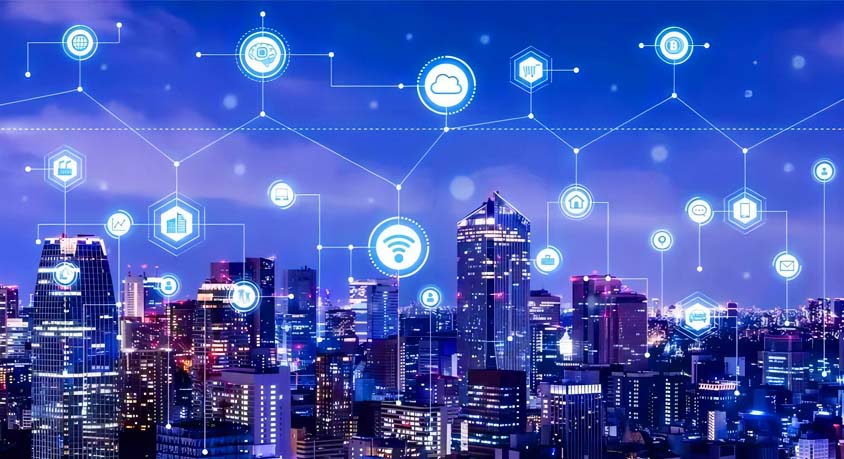
The streetlight is no longer just a light. It is a node. Cities across the United States are retrofitting their lighting infrastructure with sensors. San Diego installed 3,200 smart poles with cameras, microphones, and environmental monitors. Las Vegas followed. Chicago has Array of Things, a network of nodes measuring air quality, traffic, and weather. The stated purpose is efficiency: dimming lights when no one is around, detecting potholes, managing parking. The unstated purpose is surveillance. Once the hardware is in place, the use cases expand. A camera for traffic flow can also capture faces. A microphone for gunshots can also capture voices. A node for weather can also track Wi-Fi signals.
The technology is mundane. It is off-the-shelf IoT hardware. A standard smart city pole contains a camera with onboard processing, a microphone array, a cellular modem, and sometimes a small computer running edge AI. The data is filtered locally to reduce bandwidth. The gunshot detector only sends an alert when it hears gunshots. The traffic camera only sends metadata when it sees congestion. But the raw data exists, if only for milliseconds, before it is discarded. Who decides what is discarded? Who audits the algorithm? Who ensures that a microphone programmed to listen for 160 decibels does not also capture the conversation of two people arguing on the corner?
The privacy boundary is not a line. It is a gradient. Most people accept that a camera in a public square is watching them. They do not accept that a camera on every block, on every residential street, is watching them continuously. But that is the trajectory. Smart city grants fund the installation. The hardware is paid for by efficiency savings. The network grows because it is cheaper to add a sensor to an existing pole than to build a new pole. The grid becomes ubiquitous by accretion, not by mandate.
The data ownership question is unresolved. The city contracts with a vendor. The vendor installs the sensors. The vendor owns the platform. The city pays a subscription. When the contract ends, the data stays with the vendor. The vendor can repurpose it, anonymize it, sell it. The citizen has no say. The citizen may not even know the sensor exists. There is no sign on the pole that says "This light listens." There is no public registry of what data is collected and where it goes. The surveillance is invisible, and invisibility is its shield.
The defenders argue that the data is limited. The gunshot detector does not stream audio. It buffers a few seconds, detects a waveform, and discards the buffer. The traffic camera uses onboard AI to count cars and discards the frames. This is technically true, but technically fragile. A firmware update can change the rules. A police request with a warrant can re-enable recording. A hacker with access to the vendor's network can siphon the feed. The sensor is a door. Once the door is installed, someone will try to open it.
The comparison to the smartphone is instructive. Your phone listens for "Hey Siri" constantly. It processes audio locally and discards it unless triggered. You accept this because you bought the phone. You control the phone. You can turn it off. The streetlight is not yours. You cannot turn it off. You cannot opt out. You cannot know if the algorithm misheard a shout as a gunshot and flagged your location for police attention. You cannot challenge the data because you do not know it exists.
The countermeasure is not to rip out the poles. That is impractical. The countermeasure is transparency and governance. Cities should publish an inventory of every sensor, its capabilities, and its data retention policy. They should require independent audits of the edge AI to confirm that discarded data is actually discarded. They should mandate that raw data cannot leave the pole without a warrant. They should create a public dashboard showing where the sensors are and what they are doing. The citizen should be able to look up their block and know exactly what the light above them is sensing.
The streetlight is a metaphor. It is the oldest piece of public infrastructure, unchanged for a century. Now it is the leading edge of the surveillance grid. It watches while you walk your dog. It listens while you argue on the phone. It counts while you wait for the bus. It does not judge. It does not report. But it could. And the fact that it could is enough to change the feeling of being in public. The feeling is no longer anonymous. It is observed. And observation, without consent, is control.
Disclaimer: Mention of any brand or trademark is for identification only and does not imply partnership or endorsement