
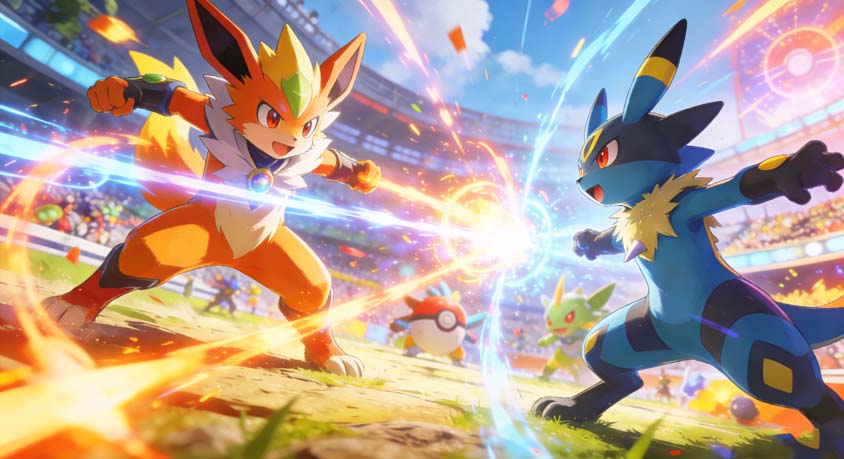
You have spent your entire Pokémon career, from the pixelated days of Game Boy to the glossy expanses of the Switch, doing one thing: winning. You have crushed the dreams of countless child trainers, toppled criminal organizations with nothing but an underleveled Pikachu, and shoved rare candies down the throats of your team like they were PEZ. It has been a glorious, adrenaline-fueled ride. But let me ask you a question that keeps me up at night: what happens after you have caught them all, beaten every league, and become the very best, like no one ever was? Do you just... retire to a nice cottage with your trusty Charizard and take up knitting?
Apparently, the folks behind the new phenomenon, Pokemon Pokopia, think the answer is a resounding yes. And judging by the player counts, the rest of the world is ready to trade their gym badges for a good set of pruning shears.
Pokopia is the universe's most elaborate and adorable answer to a question nobody asked but everyone apparently needed answered: what if a Pokémon game was just... vibes? This is not a game about type advantages or competitive breeding. This is a game where the most stressful decision you will make all afternoon is whether to place the berry tree next to the pond or closer to the Machamp's new gazebo. It is, for lack of a better term, a revolution disguised as a gardening simulator.
The premise is deceptively simple. You are not a trainer; you are a settler. You arrive in a sprawling, untouched valley that looks suspiciously like the Swiss Alps designed by a committee of very cute cartoon animals. Your goal is not to conquer, but to cultivate. You befriend the local Pokémon population by performing acts of service. You build a bridge, and a group of Psyduck finally stop pacing nervously on the riverbank and move in. You plant a wildflower garden, and a flock of Cutiefly descends like fuzzy little pollinators from heaven. You upgrade your tent to a proper cabin, and suddenly, a Jigglypuff is eyeing your spare room like a college student who just spotted a rent-free opportunity.
The gameplay loop is hypnotic. You gather resources from the environment—wood, stone, berries—but you are never alone. A Machoke might lumber over and offer to carry a massive log you have been struggling with. A team of Plusle and Minun will help you wire a new campsite for electricity, their little cheeks sparking with pride. It transforms the mundane task of resource gathering into a communal activity. It feels less like work and more like a very chill neighborhood block party that never ends.
Now, here is where things get spicy, and why the game has sparked debates fiercer than any legendary mascot argument. For the hardcore battler, the one who dreams in IV spreads and hidden abilities, Pokopia is probably their worst nightmare. There is no opponent. There is no ladder to climb. The final boss is not a champion; it is the village's annual flower arranging contest, and that Sawsbuck has a very aggressive aesthetic. These players log on, wander around for an hour wondering where the fight is, and write scathing reviews about how there is "nothing to do."
But for the rest of us—the ones who spent hours in the original games just surfing in circles because the music was nice, the breeders, the collectors, the exhausted adults who just want to come home and watch digital animals be happy—Pokopia is a revelation. It understands that not every victory needs a scoreboard. Sometimes, winning is watching a Snorlax finally squeeze into the custom-built napping pavilion you constructed specifically for his体型. Sometimes, it is hearing the little jingle that plays when a shy Eevee, who has been watching you from behind a tree for three in-game weeks, finally trusts you enough to accept a berry from your hand.
It is also, unexpectedly, a masterclass in emergent storytelling. Without a scripted narrative, you create your own. You will remember the time a sudden "rainstorm" (it drizzles for five minutes) forced you and your new Pokémon friends to huddle in a half-built cabin, sharing roasted berries and listening to the pitter-patter on the roof. You will tell your friends about the logistical nightmare of relocating an entire colony of stubborn Diglett so you could expand your pumpkin patch.
Who is this game for? It is for the burnt-out veteran who misses the sense of wonder they felt playing Blue Version under the covers with a flashlight. It is for the parent who wants to introduce their kid to the world of Pokémon without the moral complexity of making animals fight. It is for anyone who has ever looked at their stressful, fast-paced life and thought, "I wish I could just run away and build a treehouse with a talking squirrel."
A gentle heads-up, though: this game requires a mindset adjustment. You cannot rush Pokopia. It is a slow burn, a digital zen garden. If you approach it looking for a challenge, you will be bored within an hour. But if you approach it looking for a home, you might just find yourself staying for a very long time.
Disclaimer: Mention of any brand or trademark is for identification only and does not imply partnership or endorsement