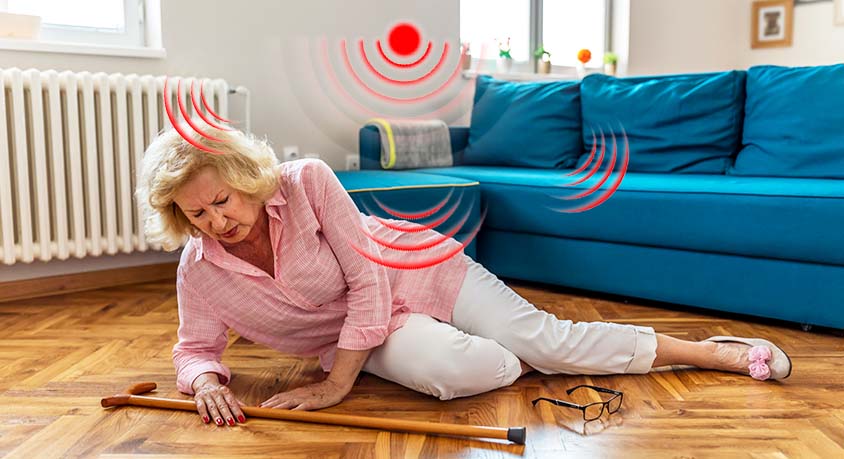
You close the bathroom door for privacy. Inside, your shower is running. From the living room, your Wi-Fi router continues its constant, silent chatter with your laptop and phone. Unbeknownst to you, the radio waves bouncing off your moving body are creating a subtle but readable disturbance in the signal. Specialized software analyzing this disturbance can determine not just that someone is in the bathroom, but can distinguish between the patterns of showering, brushing teeth, or simply standing still. This is Wi-Fi sensing. It requires no camera, no microphone, and no wearable device. It turns the essential utility of your home network into a pervasive motion and activity radar. The promise is touchless device control and fall detection for the elderly. The reality is a privacy intrusion that operates through walls, in darkness, and against which conventional defenses are useless.
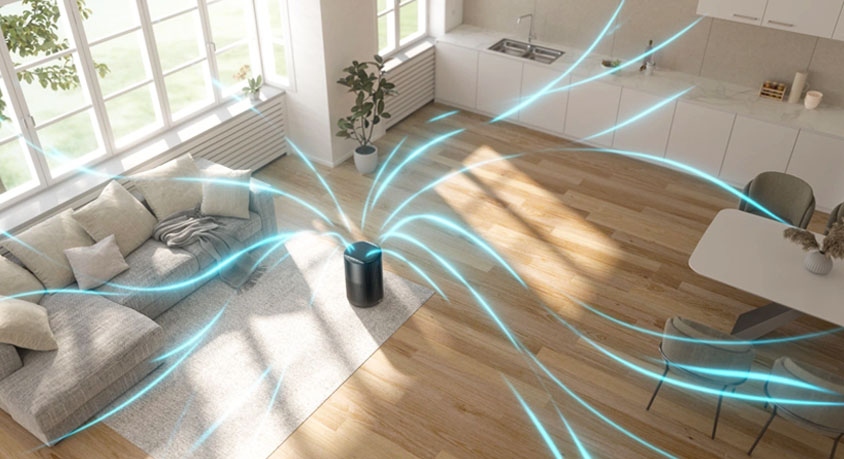
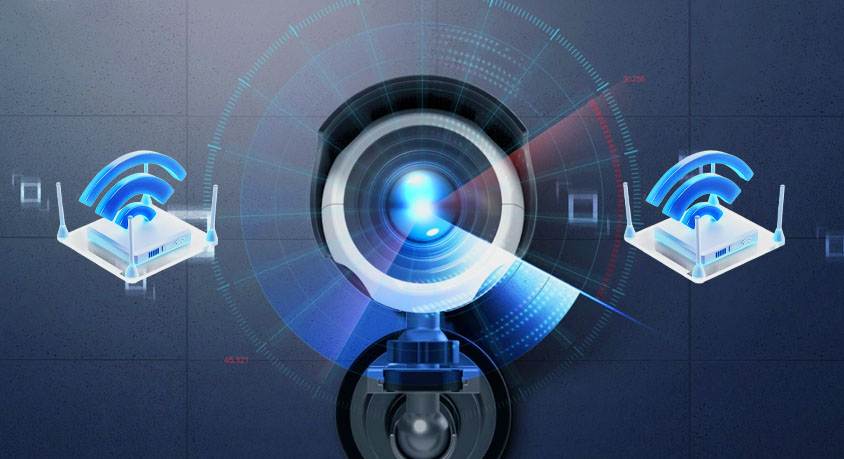
The technology exploits a fundamental property of radio waves. Think of your Wi-Fi signal not as a narrow data pipe, but as an invisible flood filling your home. Any object, especially a water-rich human body, reflects and scatters these waves. As you move, you alter the paths these signals take to reach a receiver, creating a unique pattern in the Channel State Information (CSI)—a detailed fingerprint of the radio environment. Advanced machine learning models, trained on millions of movement samples, learn to correlate specific perturbations with specific activities: the rhythmic rise and fall of a chest indicates breathing during sleep; the distinctive gait of a walk identifies a person; the sharp fall of an elderly body triggers an alert. The system does not see an image; it infers a silhouette and its behavior from the ripples in an invisible pond.
This creates an unbridgeable gap between perceived and actual privacy. You can cover a camera lens. You cannot stop existing inside a field of radio waves necessary for modern life. The sensing is performed by analyzing the same data used for internet connectivity; it is a parasitic function on an essential service. Furthermore, the hardware required is often already in place—a standard Wi-Fi 6 router may have the necessary capabilities, waiting only for a firmware update or a third-party software subscription to activate the feature. Your own network infrastructure becomes the surveillance tool.
The privacy implications are severe and twofold. First, granular activity profiling. A malicious actor with access to your network (or a company providing "security" software) could map your daily routine: when you wake, use the bathroom, cook, work, and sleep. Second, behavioral biometrics. Your walking pattern (gait) is as unique as a fingerprint. Wi-Fi sensing can identify you by your walk, distinguishing between household members. Over time, deviations from your normal patterns—slower movement, increased time in bed—could infer illness, stress, or depression, creating a highly sensitive health dataset without consent. This data, aggregated, is a commodity for advertisers, insurers, or any entity interested in behavioral prediction.
Your defense protocol must target the signal analysis, not the signal itself, since you cannot eliminate Wi-Fi. Step one is to upgrade and fragment your network. Replace your router with a model that explicitly does not support Wi-Fi sensing protocols (research is required; many brands are now promoting this as a feature). More effectively, create separate physical networks: use a wired Ethernet backbone for sensitive devices and a dedicated, low-power Wi-Fi network for mobile devices, placed in a central location to minimize unnecessary wall penetration. Step two is active signal obfuscation. Introduce random, authorized motion within the radio field. Use simple, periodic motorized devices (like a rotating fan or a swaying pendulum) in rooms where you require privacy. Their constant, predictable motion adds noise to the CSI data, making it computationally harder to isolate human movement. Step three is legal and architectural. For new construction or renovations, install RF-shielding materials in walls of private rooms (bathrooms, bedrooms). These metallic meshes or paints can contain Wi-Fi signals, creating true radio-silent zones, though this requires careful planning to allow connectivity elsewhere.
Wi-Fi sensing renders the traditional physical barrier—the wall—obsolete for privacy. Your movements are now a matter of data inference, not visual observation. To reclaim privacy, you must engineer radio chaos or radio silence. Do not trust a router's administrative settings to protect you; assume any Wi-Fi signal can be used as a sensor. Your goal is to either drown the sensor in noise or exclude it entirely from your private spaces. In the age of pervasive RF, privacy is maintained not by closing doors, but by controlling the electromagnetic environment behind them. Treat your Wi-Fi network as a potential observer and configure your space accordingly.
Disclaimer: Mention of any brand or trademark is for identification only and does not imply partnership or endorsement