Let's talk about the delicate, terrifying art of polishing a haunted mirror. The announcement of a Silent Hill 2 remake was met with a reaction unique to reviving a sacred text: not just excitement, but a profound, collective shudder of anxiety. This isn't Resident Evil 4, where the fear was about messing up perfect action pacing. This is about a masterpiece of psychological horror, a game where the terror is woven into the grain of its outdated graphics, its awkward tank controls, and, most importantly, its oppressive, purposeful ambiguity. Entrusting this to Bloober Team—a studio known for visually striking, narrative-heavy horror like The Medium and Layers of Fear—feels like hiring a brilliant, literal-minded poet to restore a faded, abstract painting. The fear isn't that they'll do a bad job. The fear is that they'll do a too good job, and in clarifying every shadow, they might accidentally disinfect the very thing that made us sick with dread in the first place.
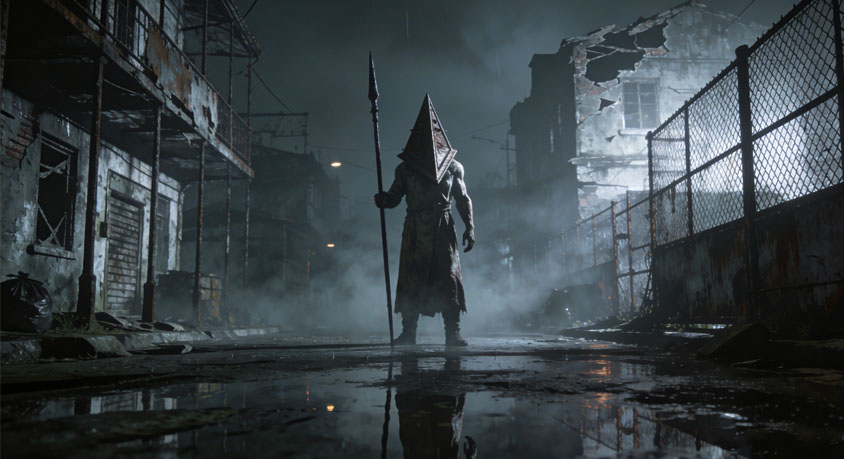
The original Silent Hill 2 is a masterpiece of implication. Its PS2-era fog wasn't just a technical limitation; it was a narrative and emotional necessity. It hid the edges of the world, making the town feel infinitely large and claustrophobically small all at once. The low-resolution textures and stiff animations left just enough room for your brain to fill in the horrifying gaps. Pyramid Head wasn't just a monster; he was a pixelated, slow-moving question mark, his true form partly sculpted by your own imagination. The horror lived in the silence between the radio static, in the things half-glimpsed. This is the legacy's greatest vulnerability in the age of Unreal Engine 5. What happens when the fog is just a volumetric lighting effect? When every rust stain on a hospital wall is rendered in 4K clarity? When Pyramid Head's helmet is so detailed you can see your own warped reflection in it? The danger is trading profound, psychological unease for high-fidelity spectacle. Bloober Team's strength is in direct, cinematic storytelling. Silent Hill 2's genius is in everything it pointedly doesn't show or say.
This leads us to the one change that could unravel everything: the modernization of James Sunderland himself. In the original, James is a vessel. His flat voice acting and disconnected movements created a sense of profound dissociation, mirroring his fractured psyche. You felt his numbness. A modern remake will almost certainly give him a mo-capped performance, nuanced facial expressions, and a voice dripping with detectable emotion. While this could be powerful, it risks making James a defined character we observe, rather than an empty shell we uncomfortably inhabit. The horror of Silent Hill 2 is introspective; it's about the monsters you meet being reflections of your own guilt and sin. If James becomes too emotionally legible from the outset, that crucial, fragile link between player psychology and character reality might snap. The town stops being your personal hell and becomes his very well-animated bad day.
Yet, there's a glimmer of perverse hope in this very dilemma. The immense pressure of this project might force the Bloober Team to evolve beyond their own tendencies. They've shown they can build an atmosphere and respect weighty themes. The question is whether they can exercise monumental restraint—to use their new technical powers not to explain, but to better obfuscate; not to make the terrifying things clearer, but to make the ordinary things feel utterly wrong. The best outcome wouldn't be a mere graphical upgrade, but a careful translation of the original's intentional "voids" into a modern language.
So, the real terror surrounding this remake has nothing to do with jump scares or monster designs. It's the existential fear of seeing a deeply personal nightmare beautifully, clinically autopsied. We're afraid the remake will be a stunning, respectful, and ultimately definitive autopsy report that confirms the cause of death, thereby killing the mysterious, lingering disease the original infected us with. We want to be scared again, not explained to. Bloober Team isn't just remaking a game; they're walking into the world's most hostile focus group, armed with a feather duster, being asked to clean a monument built on dust. Let's see if they understand that sometimes, the dust is the point.
Disclaimer: Mention of any brand or trademark is for identification only and does not imply partnership or endorsement