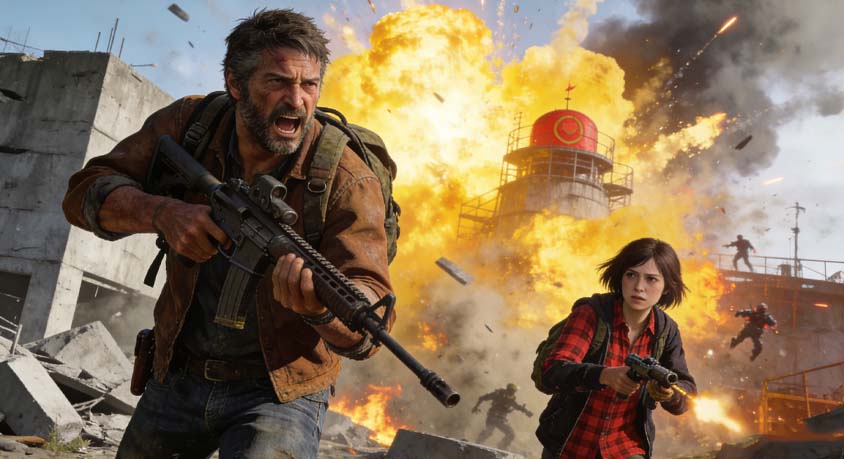
Let’s cut through the fanboy/fangirl yelling and meme wars: The Last of Us Part II didn’t split audiences because of a single plot twist (though that twist definitely lit the fuse). It split them because it dared to yank the steering wheel out of your hands and say, “Nope—you’re not here to play hero. You’re here to learn a lesson.” Most games treat you like a co-director, letting you fudge choices or reload saves to get the “happy” ending. Naughty Dog’s magnum opus? It’s a strict film director who locks the script and forces you to act out every messy, uncomfortable scene—even when your fingers beg to hit pause. That’s “narrative obedience,” and it’s why half the gaming world calls it art and the other half calls it a betrayal.
Here’s the dirty secret: The Last of Us Part II’s gameplay isn’t just there to let you shoot clickers or climb buildings—it’s a weapon to ram its theme of cyclical hate down your throat. When you’re forced to play as Abby, the character who dismantles your favorite protagonist’s world, you can’t skip her levels, can’t make her nicer, and can’t fast-forward to Ellie’s revenge. You have to hunt with her, fight for her, and even feel the weight of her loss—all while your brain screams, “I don’t want to root for this person!” It’s like being forced to finish a book whose main character you despise, except instead of turning pages, you’re swinging a bat or sneaking through sewers. Other games let you “win” by outsmarting the system; this one makes you “lose” control to make a point.
What makes this infuriating (and genius) is how seamlessly gameplay ties to the story. When Ellie’s rage makes her reckless, your aiming gets shakier. When Abby’s guilt weighs on her, her movements slow down. You’re not just watching their pain—you’re performing it. Gamers love feeling powerful, which is why most action games hand you a rocket launcher and a “save the world” checklist. The Last of Us Part II? It strips that power away. You can’t save everyone, you can’t fix your mistakes, and you sure as hell can’t rewrite the story to make Ellie’s pain go away. It’s the opposite of the power fantasy we’re used to, and let’s be real—no one likes being told they can’t have what they want, even in a virtual world.
The controversy boils down to one question: Is a game still a “game” if it doesn’t let you play by your own rules? The people who praise it argue that Naughty Dog turned gaming into something more—an immersive story where every button press serves a purpose, not just mindless fun. The people who hate it? They say it’s a movie with controller prompts, a betrayal of the interactivity that makes gaming unique. Both sides are right, and that’s the beauty (and frustration) of it. The Last of Us Part II doesn’t care if you like it—it cares if you think about it, about how hate makes us do things we don’t want to do, about how control is an illusion even in our favorite escape worlds.
At the end of the day, you can argue about plot holes or character choices until your controller dies, but the real reason this game sticks with you is simple: it made you uncomfortable. It forced you to walk in someone else’s virtual shoes, even when you didn’t want to, and that’s a trick few games dare to pull. Love it or hate it, The Last of Us Part II didn’t just give us a story—it gave us a mirror, and most of us didn’t like what we saw.
Disclaimer: Mention of any brand or trademark is for identification only and does not imply partnership or endorsement