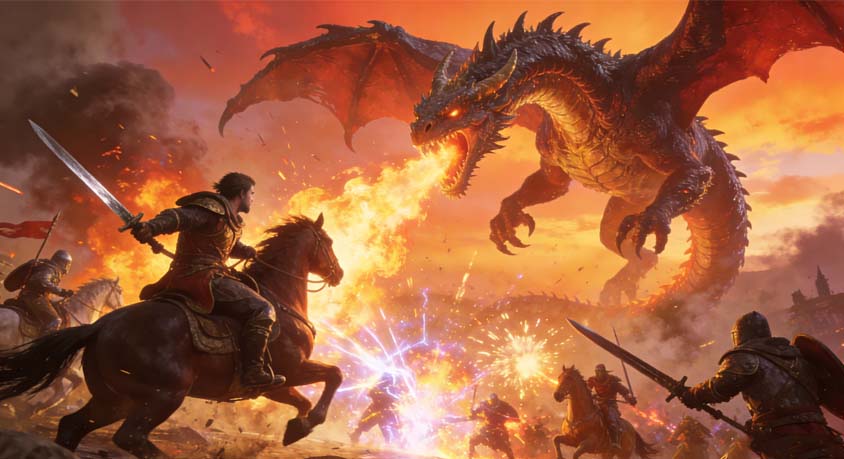
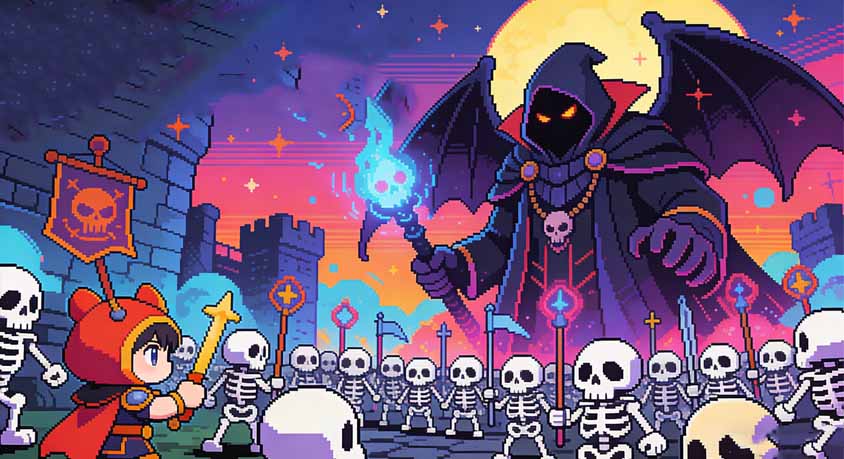
At first glance, Loop Hero looks like a lazy gamer’s fantasy: your hero runs in endless circles automatically, slashing monsters without you lifting a finger. It’s the kind of game you’d stick on in the background while scrolling TikTok—until you realize you’ve been leaning forward for an hour, sweating over whether to place a “Village” card or a “Graveyard” card. This isn’t AFK gaming; it’s a strategic puppet show where you pull the strings, designing the very challenges your hero faces (and often cursing yourself for making them too hard). So why has this tiny indie title turned “auto-battler” on its head and hooked millions? Because Loop Hero’s greatest trick is making you the game designer—and nothing feels better than outsmarting the chaos you created.
Let’s break the loop: The core of Loop Hero is simple—you place cards on the map as your hero runs, each card adding terrain, enemies, or rewards. A “Forest” card gives you wood for building your base; stack too many, and you’ll spawn a bloodthirsty Werewolf that tears your hero apart. A “Graveyard” card drops rare loot; cluster three together, and a Lich rises to unleash undead hell. This isn’t randomness—it’s a risk-reward puzzle where every card is a bet. Do you place a “Mountain” card for defense boosts, even though it might spawn a Harpy? Do you sacrifice a safe run for the chance to unlock a new card that’ll make future loops easier? Loop Hero doesn’t just let you play—it forces you to think like a gambler, and the house (read: your own decisions) always has a way of winning… or losing spectacularly.
What makes this addictive is how it flips the “auto-battler” script. Most games in the genre let you sit back and watch; Loop Hero turns you into a sadistic dungeon master. You’re not just collecting cards—you’re crafting a nightmare. Want to test your luck? Spam “Swamp” cards to flood the map and spawn giant Toads. Need more resources? Drop a “Farm” card… but beware, it’ll attract hungry Raiders if you don’t pair it with a “Guard Tower” card. Even “safe” choices backfire: a row of “Field” cards might look harmless, but stack enough, and you’ll wake a Golem that crushes your hero like a bug. The game laughs at your overconfidence—and you laugh right back, resetting the loop to try a smarter combo.
Loop Hero also nails the “easy to learn, impossible to master” sweet spot. You can pick up the basics in five minutes: place cards, collect loot, build your base. But mastering it? That takes hours of trial and error. You’ll learn that pairing “Village” and “Church” cards cancels out enemy spawns (genius for low-risk runs), or that “Rock” cards stacked with “Moss” cards turn into impenetrable barriers (until a Dragon burns them down). Every failure is a lesson: “Never place three Graveyards again” becomes “Maybe three Graveyards and a Chapel card will balance it out.” The base-building loop ties it all together, too—every resource you grind feeds into upgrades that let you take bigger risks, turning your tiny camp into a fortress that lets you tackle loops you once fled from.
Unlike other auto-battlers that feel passive, Loop Hero makes you own every win and loss. You won’t blame RNG when a Vampire Lord wipes your hero—you’ll blame yourself for placing that final “Castle” card. You won’t celebrate an easy run—you’ll cheer when you survive a loop you designed to be impossible. It’s a game that punishes greed but rewards creativity, where a “bad” card combo can turn into a breakthrough if you think outside the loop. Even the “auto” part is a trick: your hero’s path is fixed, but your choices shape every step of it. You’re not just along for the ride—you’re driving the car, and sometimes you’ll crash it into a tree for the thrill of it.
By the time you’re three loops deep, you’ll forget you’re “supposed” to be relaxing. You’ll be muttering to yourself, “Just one more card,” as the sun comes up, replaying the same loop with a new strategy, and cursing the Werewolf that keeps ruining your plans. Loop Hero isn’t just a game—it’s a test of your own judgment, a puzzle where the solution is never perfect, and the fun is in the failure. It’s proof that the best adventures aren’t the ones the game gives you—they’re the ones you make for yourself.
Disclaimer: Mention of any brand or trademark is for identification only and does not imply partnership or endorsement