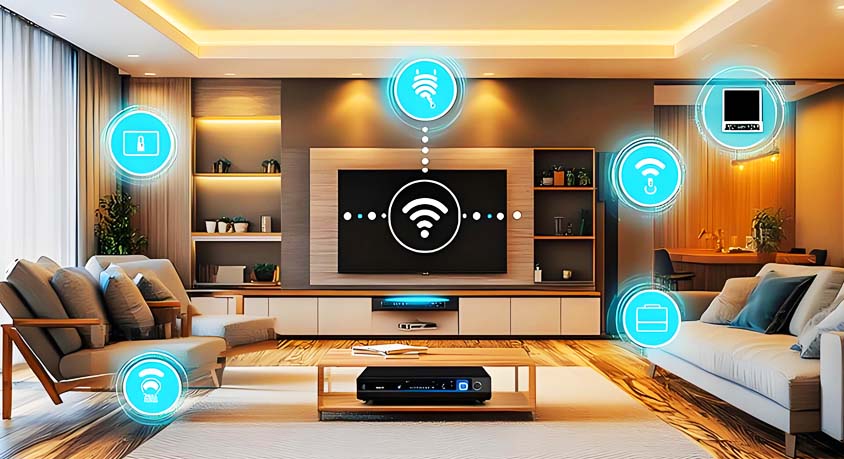
The front door clicks shut behind you. Keys drop into the bowl. For a moment you just stand there in the dark, letting the mask slide off your face because there's no one around to see it anyway. The day was rough. The meeting went sideways. Your phone is full of messages you don't have the energy to answer. You take a breath, ready to navigate to the couch in the darkness, when the hallway gradually warms with a soft, golden light. Not the harsh overhead you installed for Zoom calls. Something gentler. Like the room knows.
This isn't a scene from Her or some Black Mirror episode where technology crosses every possible line. This is actually happening in apartments right now, and the line it's walking isn't between creepy and convenient—it's between smart and emotionally intelligent.
A friend of mine who works in tech PR told me about her new lighting setup like she was describing a therapist who lives in her ceiling. She didn't buy it for the emotional stuff, just wanted lights she could control from bed like the rest of us. But this system came with sensors—a camera module for facial expression analysis, a microphone for voice tone monitoring, and integration with her fitness watch for heart rate data. She figured it was marketing fluff until a Tuesday night when she came home furious about a work situation, trying to play it cool, and the lights shifted to a deep, calming blue without her saying a word.
The system had registered the tension in her voice when she cursed at her front door lock, caught the micro-frown she didn't know she was making, and cross-referenced her elevated heart rate. It didn't blast her with cheerful white light. It gave her the visual equivalent of a chill pill.
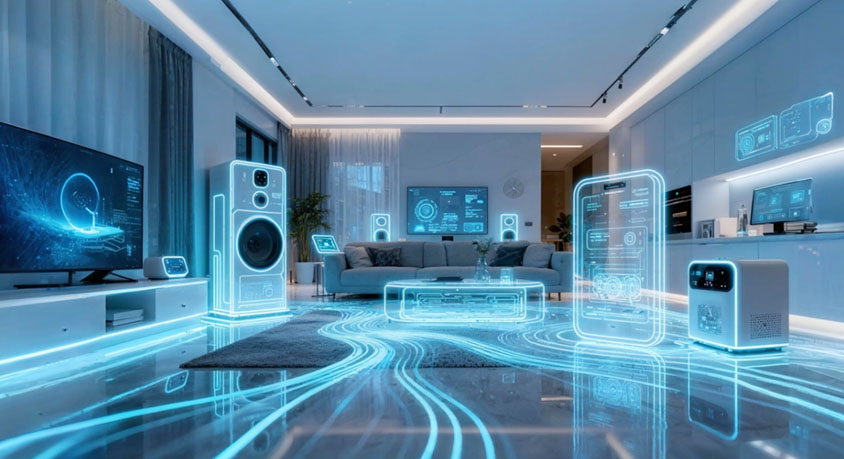
This is where affective computing meets the Internet of Things in a way that actually matters. The technology combines facial action unit analysis—basically tracking the tiny muscle movements that betray your real emotional state even when you're trying to hide it—with prosody analysis of your speech patterns. Are you speaking faster than usual? Is your pitch higher? Combine that with biometric data and you get a picture of your emotional landscape that's more accurate than any human reading.
The lighting itself isn't magic. It's based on solid circadian science. Researchers have known for years that light in the 460-480 nanometer blue wavelength range suppresses melatonin production and keeps you alert, while warmer wavelengths around 2700 Kelvin allow your body to transition naturally toward rest. What's revolutionary is the real-time adaptation. The system isn't running on a timer or a voice command. It's responding to you.
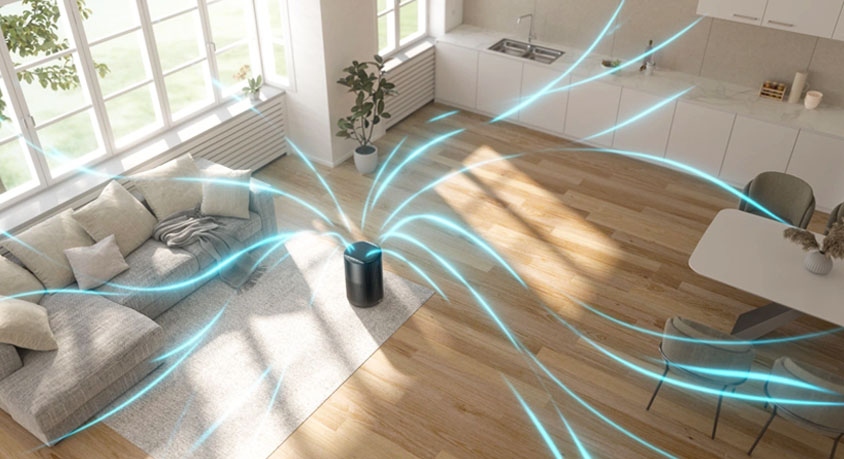
Think about what this means for the growing number of people living alone. The loneliness epidemic isn't just about being physically isolated—it's about the absence of someone who notices when you're not okay. A roommate or partner might miss the signs because you're good at hiding them. A sensor suite doesn't miss anything. It doesn't get distracted by its own phone. It just quietly adjusts the environment to match what you need, not what you're projecting.
The privacy implications are real and worth losing sleep over. Having a camera constantly analyzing your face in your own home is the kind of thing that should make anyone uncomfortable. But the architecture matters more than the feature set. The better systems are moving toward on-device processing, where all that facial and vocal analysis happens locally on a hub in your closet. Your data never touches the cloud. The company doesn't get to train its models on your breakdowns. The light just does its job and forgets why.
We've spent a decade making our homes responsive in ways that are mostly about convenience—thermostats that learn when you're cold, speakers that play what you ask. But the next chapter isn't about efficiency. It's about creating spaces that don't just hear you, but actually listen. And in a world where everyone asks how you're doing but nobody really wants the answer, walking into a room that already knows might be the most honest relationship you have all day.
Disclaimer: Mention of any brand or trademark is for identification only and does not imply partnership or endorsement