Let's be honest: your attention span didn't stand a chance. Between the Slack pings, the TikTok scroll, the random roommate who suddenly needs to tell you something "really quick," your brain is basically a browser with 47 tabs open and one of them is playing ads. You sit down to work, determined, focused, ready to conquer. And then your phone buzzes. And just like that, you're gone. Twenty minutes later you're watching a guy build a pool in the desert. We've all been there. It's not a character flaw. It's your environment bullying you.
But what if your headphones stopped being just a passive sound blocker and started actively fighting for your focus? What if they could sense, in real time, that your brain is wandering off to think about what to have for dinner, and they just... shut that down? Welcome to the era of the IoT focus zone, where your audio gear isn't just playing music—it's reading your mind and adjusting reality accordingly.
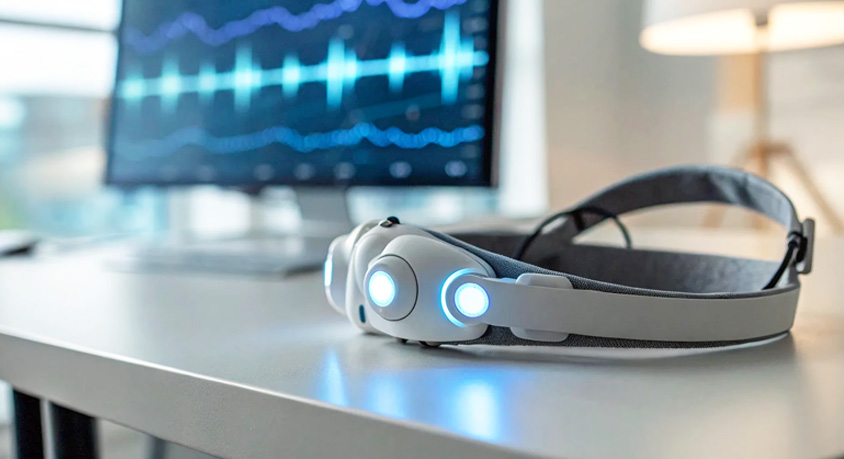
The tech here is wilder than your group chat. It starts with EEG sensors embedded directly into the headphone band or earbuds. These aren't the clunky medical caps from the 90s. They're dry-contact electrodes, smaller than your fingernail, that detect the electrical activity happening in your brain right now. They're reading your theta waves (the daydreaming ones) and your beta waves (the locked-in ones). They know, within seconds, whether you're actually working or just pretending to work while thinking about your ex.
Here's how the intervention actually goes down. You're typing away, deep in the zone. Then a notification tries to steal your attention. Your brain flickers—just a micro-second of distraction. The EEG catches it. The onboard AI, running locally so your thoughts aren't floating around some data center, makes a call. It subtly shifts the noise cancellation profile, adding a layer of pink noise that masks the distracting sound your brain just reacted to. Or it transitions the ambient soundtrack from birdsong (good for creative flow) to brown noise (better for deep analytical work). You don't consciously notice the shift. You just notice that you're still working. The distraction attempt failed. The headset won.
The system learns your patterns over time. It knows that you usually crash around 3 PM, so it preemptively adjusts the acoustic environment to keep you engaged. It knows that open-plan office noise triggers your fight-or-flight, so it ramps up isolation before you even feel annoyed. It's like having a personal assistant who lives in your ears, whose only job is to keep you in the zone. And unlike your actual assistant (aka you), it never gets tired of doing its job.
The multi-modal integration is where it gets spicy. The focus zone isn't just headphones. It's a whole ecosystem. A smart desk lamp, synced to your brain state, dims or brightens based on your fatigue level. A diffuser releases focus-boosting scents when the sensors detect you're entering a flow state, reinforcing the pattern. The room literally shapes itself around your cognition. You're not just blocking out the world. You're building a world optimized for your brain.
The science behind this is solid. Studies on neurofeedback show that people can learn to enter flow states faster when given real-time information about their brain activity. The headset isn't waiting for you to learn—it's doing the adjustment for you. It's like training wheels for focus. Eventually, your brain associates the specific acoustic signature with deep work, and the transition becomes automatic even without the tech. But why wait? Why struggle through years of meditation practice when your headphones can hack the system right now?
The privacy conversation here is actually legit. Brain data is the most intimate data there is. It's not just what you do—it's what you think about doing. The best devices in this category process everything on-device. Your wandering thoughts about whether you left the stove on never leave the headband. The AI learns from you, but it doesn't report to anyone. You're not building a profile for advertisers. You're just building a better workspace.
Disclaimer: Mention of any brand or trademark is for identification only and does not imply partnership or endorsement