My friend Mia has always been obsessed with space—she has a poster of the Milky Way above her bed and once stayed up all night watching a rocket launch. But even she wasn’t ready for the panic of this space exploration game. She texted me at 8 p.m. with a voice memo, voice shaking: “I crashed. Oxygen’s at 12% and I’m staring at these purple plants that glow. What should I do?” By 9 p.m., she’d calmed down enough to send a photo: her tiny base, a metal hut with a solar panel, next to a crater. “Scanned the plants—they give oxygen. Turns out I wasn’t gonna die… yet.” That’s the hook of this game: it throws you into the deep end—alone, vulnerable, on a planet no one’s ever seen—and makes you fight to not just survive, but find your way back to something that feels like home.
The first thing you notice is loneliness. Mia told me about her first night in the game: she turned off her base lights to look at the sky—two moons, one blue, one orange—and listened to the wind howl through alien rocks. “It’s quiet, but not the good kind,” she said. “Like the planet’s holding its breath. I kept checking my radar, even though I knew there was no one else there.” That loneliness isn’t a flaw—it’s the point. Every time she found a new resource (like silver in a cave or fuel from a weird, bulbous tree), it felt like a victory not just over the planet, but over the quiet. She’d text me every small win: “Found a way to make water!” “Built a better scanner—can see resources from farther away!” It’s the little things that keep you going when the universe feels huge and empty.
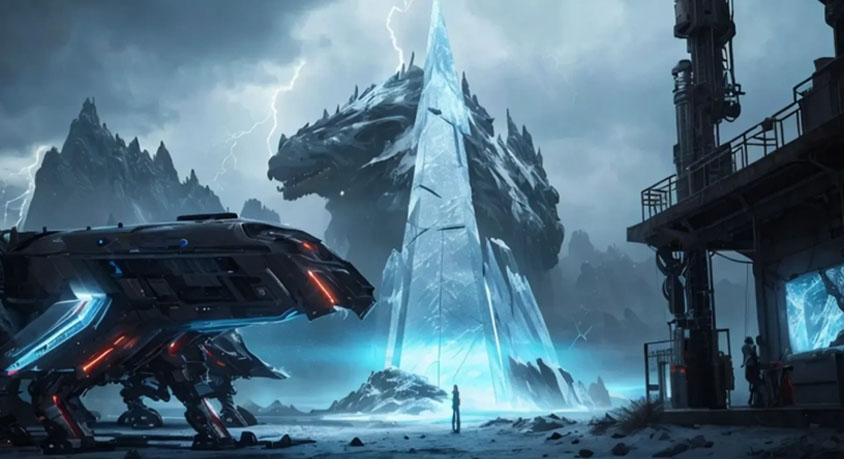
Then there’s the exploration—the “wait, what’s that?” thrill that makes you forget you’re just sitting on a couch. Mia was wandering a desert biome last week when she spotted something glinting: a stone pillar covered in strange symbols. “Scanned it, and the game said it’s from an ancient civilization,” she said, voice excited. “Follow the symbols to a cave, and there’s a ship part! Now I can fix my engine a little.” That’s how the game pulls you in—each small discovery leads to another. She found a crashed alien ship with a log (written in a language she had to decode), then a field of crystal that powers better tools, then a map marker pointing to a “ruin” on the next planet. “It’s not just ‘find resources to survive,’” she said. “It’s ‘find clues to figure out where you are… and where you’re going.’”
Survival here isn’t just about oxygen and food—it’s about adapting. Mia had to rebuild her base three times: once when a storm blew down the walls, once when she ran out of solar power at night, and once because she wanted a better view of the stars. She upgraded her suit to handle toxic rain, her scanner to spot hidden caves, and her ship to jump to nearby planets. “Last night, I landed on a planet with red sand and oceans that glow green,” she texted. “Found a ruin with a hologram—some alien talking about ‘the center of the galaxy.’ Now that’s my goal.” It’s a slow burn—no big, flashy fights, just the quiet satisfaction of inching closer to “home,” whatever that means in this game.
By the end of the week, Mia was less panicked, more curious. She sent me a video of her flying her ship away from a planet, the stars stretching out in front of her. “Feels like I’m actually finding my way,” she said. That’s the magic of this game: it turns loneliness into purpose, and survival into exploration. You’re not just a player—you’re an astronaut, adrift in the cosmos, clinging to the hope that the next planet, the next clue, the next glow-in-the-dark plant, will bring you one step closer to home. And when you finally jump to a new system? It’s not just a win—it’s a reminder that even in the biggest, quietest universe, you’re never truly lost if you keep looking.
Disclaimer: Mention of any brand or trademark is for identification only and does not imply partnership or endorsement