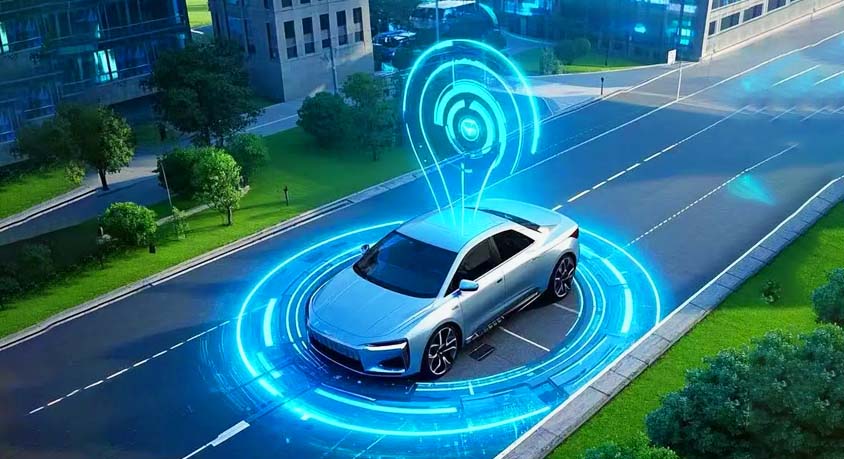
You wake up at 2 AM to the sound of an engine starting outside. Your car, parked in your driveway, has turned on its lights and is slowly backing out onto the street, navigating autonomously towards the main road. This is not a ghost story or a hacker's stunt. It is the logical endgame of IoT-enabled asset finance. In 2026, lenders are no longer just installing GPS trackers; they are embedding full remote control modules as a standard condition for high-risk auto loans. The promise is reduced loss for lenders. The reality is the transfer of ultimate physical control of your property to a remote server, with automated systems making decisions that affect your safety, livelihood, and privacy. The repo man is now a software protocol, and his hours are 24/7.
The technology stack is a combination of existing systems weaponized for enforcement. Think of your financed car not as a vehicle you own, but as a licensed asset with a deeply embedded corporate "sleeper agent." This agent consists of a telematics control unit (TCU) with a cellular modem, a GPS receiver, and, critically, a gateway module that has been granted electronic access to the vehicle's CAN bus—the internal network that controls everything from the engine and brakes to the door locks. Upon a default (often defined with minimal grace period in the fine print), the lender's platform sends a command. Phase one is a "grace nudge": the infotainment screen displays an urgent payment reminder. Phase two is a "soft disable": the vehicle is prevented from restarting after the next ignition cycle. Phase three is the "hard reclaim": if the vehicle is stationary and deemed in a "safe" location (e.g., a driveway, not a highway), the system can unlock the doors, start the engine, and guide it to a pre-programmed collection point using a basic autonomous retrieval mode, often within a geofenced area.
This creates profound safety and legal gray zones. The most immediate danger is the "soft disable" occurring in motion—a possibility due to lag or error in GPS positioning. A car losing power on a freeway is a lethal weapon. While companies claim safeties exist, the integration of a third-party system into the vehicle's safety-critical networks is an inherent vulnerability. Legally, the practice exists in a void. The fine print of your loan agreement likely grants the lender the right to "use technology to locate and secure the collateral." Courts are now debating whether "secure" includes autonomously moving property from private property, which could constitute trespass or conversion. The balance of power has shifted entirely; the lender no longer needs to establish physical possession through a human agent, lowering the cost and risk of repossession to near zero.
Your defense against this is not technological; it is contractual, procedural, and physical. First, conduct extreme due diligence before signing. Scrutinize the "default management" section of any loan or lease for terms like "remote disable," "starter interrupt," or "autonomous recovery." Negotiate for their removal. If it is non-negotiable, walk away. The vehicle is a liability, not an asset. Second, if you are already in such an agreement, your goal is to sever the command link. Consult a qualified, independent automotive electrician. Have them install a high-quality, physical OBD-II port lock and, if possible, a switch that disconnects power to the TCU or aftermarket repo module. This may void warranties but preserves operational control. Third, practice data obfuscation. If you must keep the system active, use a GPS jammer/detector to understand when the vehicle is phoning home. For critical trips, place the vehicle in a metal-roofed garage that blocks cellular and GPS signals, rendering it invisible and unreachable by the repo system.
IoT repossession is the culmination of a philosophy where ownership is contingent on perfect compliance, enforced by silent, automated systems. Your strategy must be to reject the premise, contain the technology, or obscure the asset. Do not accept a loan that turns your primary vehicle into a potential automated escapee. Treat any connected device tied to a financial agreement as a dual-use object: a tool for you, a weapon for the lender. Your autonomy in 2026 depends on reading the fine print and being willing to physically disconnect the wires that others use to control what you rely on. In the age of smart repossession, true ownership is defined by your ability to say "no" to the embedded agent and "go" when you choose.
Disclaimer: Mention of any brand or trademark is for identification only and does not imply partnership or endorsement