
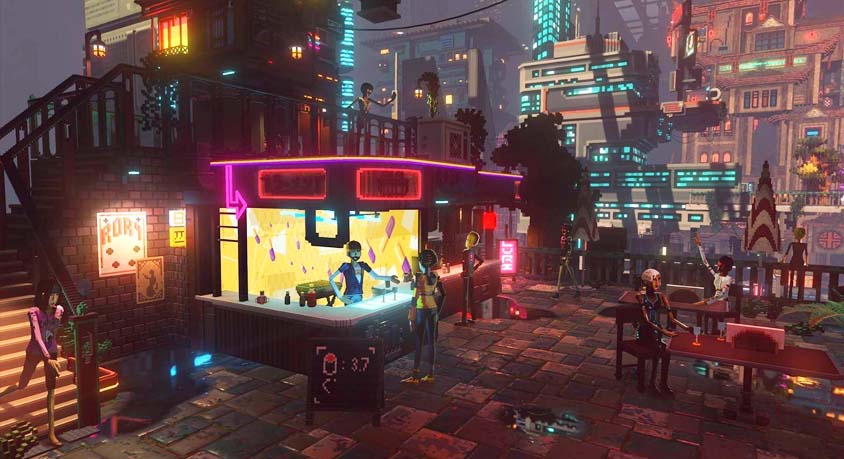
Let me tell you about the most satisfying power fantasy I've experienced in years. It doesn't involve hacking mainframes, fighting corporate armies, or installing chrome limbs. It involves broth. Specifically, perfecting my grandmother's pork bone broth recipe, sourcing the freshest noodles from a supplier who only appears on Tuesday nights, and building a loyal customer base of cybernetically-enhanced night owls who crave authentic comfort food at 2 AM. My empire is a 12-seat noodle bar in a rain-soaked corner of Nivalis, a sprawling cyberpunk city of neon and smog. My weapon is a ladle. My armor is a grease-stained apron. And my goal, my glorious, obsessive goal, is to become the most beloved restaurateur in this entire dystopian mess. This is Nivalis, the game that asked a question no other cyberpunk title has thought to ask: what if you didn't want to take down the system, but just wanted to open a really good restaurant within it?
The premise is beautifully subversive. You arrive in Nivalis, a vertical city of gleaming towers and shadowy alleyways, with nothing but a dream and a small amount of capital. The world is classic cyberpunk: corporations rule, life is cheap, and the rain never quite stops. But instead of joining a rebel faction or becoming a mercenary, you do something radically ordinary. You rent a small space, buy some equipment, and start cooking. The game is, at its core, a business simulator with the most atmospheric wrapper imaginable. You'll manage every aspect of your restaurant: sourcing ingredients, setting prices, designing your space, hiring staff, and most importantly, crafting a menu that keeps customers coming back. The cooking system has genuine depth, with recipes to discover and perfect, each dish requiring the right balance of ingredients and technique. Your first batch of noodles will be mediocre. Your hundredth will be legendary.
But Nivalis isn't just about the restaurant. It's about building a life in this city. You'll explore the sprawling vertical landscape, discovering hidden neighborhoods, quirky characters, and opportunities to expand your empire. Maybe you'll open a second location. Maybe you'll diversify into a bar, or a club, or a tiny shop selling handmade dumplings. Maybe you'll invest in real estate, becoming not just a business owner but a landlord. The city responds to your success. Regular customers become friends. Suppliers remember your preferences. Rival restaurateurs eye your growing reputation with a mix of respect and jealousy. You're not just running a business; you're becoming part of the city's fabric, a thread in its neon tapestry.
The mechanics are deep without being overwhelming. Each day brings choices. Do you spend the morning fishing for rare ingredients at the canal market, or do you focus on training your new line cook? Do you invest in a fancy new sign to attract more customers, or save for that second location you've been dreaming about? Do you take a risk on an experimental dish that could be a hit or a disaster? The game rewards careful planning but leaves room for spontaneity. Some of my best memories came from closing early to attend a rooftop party hosted by a mysterious musician, a decision that led to a new friendship and, eventually, a regular customer who brought in half the neighborhood.
For the player who needs this experience, the audience is anyone who's ever fantasized about being their own boss, even in a fictional world. It's for the restaurant dreamers, the foodies, the people who watch cooking shows and think "I could do that." It's for cyberpunk fans who love the aesthetic but are tired of the same old rebel narratives. It's for management sim veterans who've built farms, theme parks, and prisons, but never a noodle bar in a rain-soaked dystopia. The game asks for your time, your creativity, and your willingness to embrace the slow burn of building something from nothing.
A few things to know before you open your doors. The game is slow, deliberately so. This isn't about rapid expansion; it's about the daily grind of running a business, with all its small victories and setbacks. The world is gorgeous but melancholy; Nivalis is a beautiful place to visit, but you wouldn't want to live there without your cozy restaurant to retreat to. The business systems are detailed; if you're looking for a casual experience, the learning curve might feel steep. But if you embrace it, if you let yourself fall into the rhythm of prep, service, and cleanup, the game becomes something special. A meditation on ambition wrapped in a cyberpunk shell.
Disclaimer: Mention of any brand or trademark is for identification only and does not imply partnership or endorsement