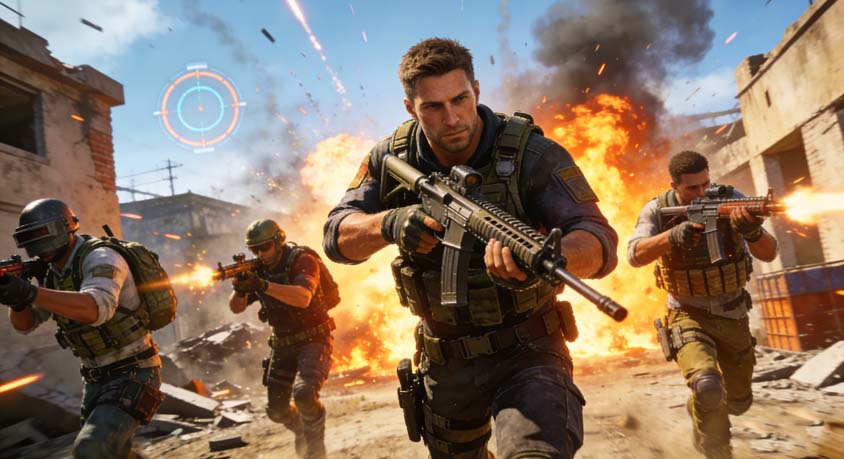
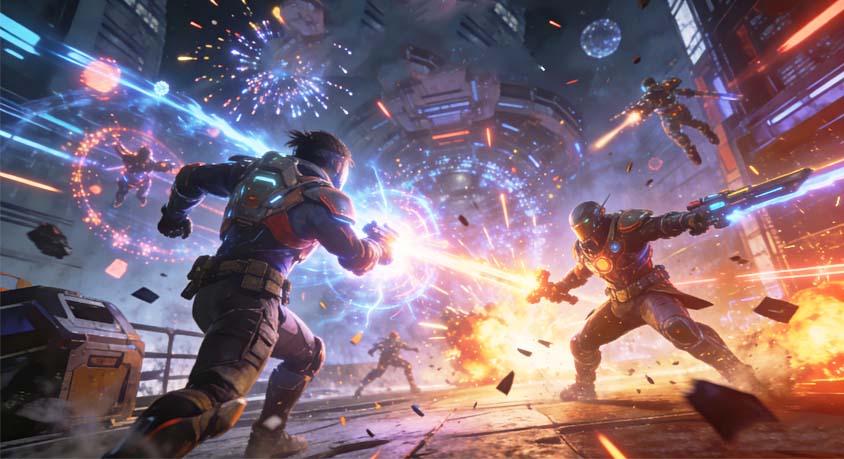
Let me tell you about a game you've probably never heard of. That's not an insult. It's the problem. Concord is a new hero shooter from Sony, developed by Firewalk Studios, backed by the full weight of one of the biggest names in gaming. It has characters, abilities, a sci-fi setting, and all the production value money can buy. It also has, by all available evidence, approximately zero cultural presence. The reveal trailer dropped. The internet shrugged. The beta came and went. The discourse, to the extent there was any, was a quiet murmur followed by a louder silence. The game hasn't launched yet, and it's already dead. This isn't hyperbole. This is the strange, brutal reality of the modern gaming market, where a product can be perfectly functional, competently made, and utterly irrelevant. Concord isn't a failure of quality. It's a failure of timing, identity, and the cruel math of attention. And it's a warning to every studio chasing a trend that peaked years ago.
Let's start with the obvious: the hero shooter genre is crowded. Overwatch 2 is still there, limping along on life support and nostalgia. Valorant has carved its space with tactical precision and esports credibility. Apex Legends moves at a different speed entirely. And then there's a dozen other contenders, dead and dying, that have proven one simple truth: players only have room for one or two of these games in their lives. A hero shooter isn't a game you play; it's a game you maintain. You learn the maps, the characters, the metas. You invest time, money, and emotional energy. Asking players to abandon that investment for a new, unproven competitor is like asking someone to leave a long-term relationship for a blind date. It's possible, but the new partner better be spectacular.
Concord's trailers suggested it was not spectacular. It was adequate. The character designs were fine. The abilities were fine. The graphics were fine. Everything was fine. And in a genre where identity is everything, "fine" is a death sentence. Overwatch succeeded because its characters were instantly iconic. Valorant succeeded because its gameplay was brutally precise. Apex succeeded because its movement was revolutionary. Concord arrived with no discernible reason to exist. It didn't do anything better than its competitors. It didn't do anything different. It just… was. And in a market where players are already overserved, being just another option is the same as being no option at all.
Then there's the Sony factor. The company has built its reputation on cinematic, single-player blockbusters. God of War, The Last of Us, Horizon—these are the games that define the PlayStation brand. They are stories you invest in, worlds you explore, experiences you complete and remember. A live-service hero shooter is the opposite of that identity. It's not a story; it's a service. It's not a journey; it's a treadmill. Sony's attempt to pivot toward this model has felt, from the outside, like a square peg being hammered into a round hole. Concord isn't just fighting competitors; it's fighting its own parent company's brand identity. Players look at it and think, "Why is Sony making this? This doesn't feel like a PlayStation game." And that confusion is fatal.
The beta numbers, where they've been reported, tell the story. Tiny concurrent players. Long queue times. A community so small that matches felt like reunions. The game isn't failing because it's bad; it's failing because no one showed up. And without a community, a hero shooter is just a lobby simulator. The cycle is brutal and self-reinforcing: low players mean long queues, which mean frustrated players, which mean fewer players, which mean longer queues. Concord hasn't launched yet, but it's already trapped in that spiral. The launch won't save it; it will just make the silence official.
So, who's to blame? The developers for making a competent but unremarkable game? The marketers for failing to generate hype? The executives for greenlighting a project in a saturated genre? The answer is all of the above, which is to say, no one in particular. Concord is a victim of the system it was born into. It's a product of a moment when every publisher decided they needed a live-service hit, regardless of whether they had anything new to say. It's a monument to the idea that "good enough" is never enough, that attention is the only currency that matters, and that in a world of infinite options, being forgettable is the same as being absent.
Concord will launch. It will likely be fine. And then it will fade, a quiet footnote in a year of louder failures. The lesson, if there is one, is simple: don't bring a knife to a gunfight, and don't bring a perfectly adequate hero shooter to a genre already dominated by legends. Now, if you'll excuse me, I'm going to go play something that knows exactly what it is. That's more than Concord ever did.
Disclaimer: Mention of any brand or trademark is for identification only and does not imply partnership or endorsement