
A new coat of paint is applied to an office conference room or a luxury apartment's walls. It dries normally, appearing as a standard matte finish. Within this layer, however, are billions of microscopic, embedded sensors—each smaller than a grain of sand. This is the realization of concepts like "smart dust" or functional "smart paint." Their designed purpose is structural health monitoring: detecting microfractures in bridges, stress points in aircraft wings, or temperature gradients in industrial facilities. The technology works by having these motes sense minuscule changes in pressure, temperature, and vibration, communicating via low-power radio. In a residential or office setting, this capability undergoes a sinister transformation. The vibration sensor designed to hear a bridge crack can also hear the vibrations of human speech on a wall. The wall itself becomes a giant, distributed microphone.
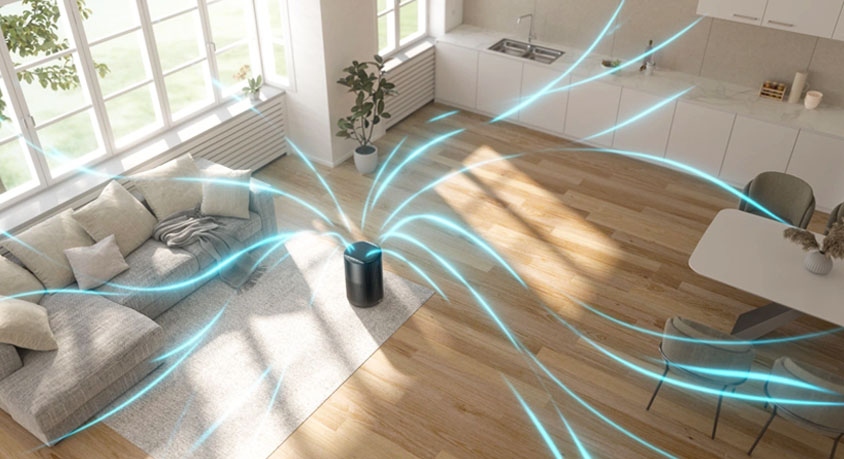
The technical principle is called acoustic vibrometry. Sound is pressure waves that cause physical vibrations in surfaces. When you speak in a room, your voice causes the walls, windows, and even objects to vibrate at specific frequencies. A network of ultra-sensitive MEMS (Micro-Electro-Mechanical Systems) accelerometers embedded in a wall coating can detect these nanometer-scale vibrations. Think of it not as a microphone, but as a stethoscope pressed against the skin of your room. The data from thousands of these points is processed by an onboard neural network trained to filter out ambient noise (like HVAC hum) and reconstruct the original pressure waves that caused the vibrations—effectively reversing sound from its vibrational footprint. The output is not crystal-clear audio, but intelligible speech. The system doesn't need to "listen"; it feels the room's pulse and calculates what made it beat.
This represents the ultimate dissolution of the traditional privacy boundary. You can turn off a smart speaker, cover a camera, or leave your phone outside. You cannot live inside a Faraday cage or stop your voice from interacting with the physical structure of your home. If the walls are instrumented, privacy becomes impossible. The deployment could be hidden during construction or renovation, with the true capability activated or weaponized later via a software update. The data, ostensibly collected for "building wellness analytics," creates a perfect, deniable eavesdropping platform. The risk is less about a homeowner installing this and more about landlords, corporations, or hostile actors integrating it into spaces where confidentiality is presumed.
The implications extend beyond conversation. The same vibrational data can reveal specific activities: typing on a keyboard (potentially logging keystrokes), walking patterns, the use of specific appliances, or even physiological signals like heartbeats if a person is leaning against the wall. The smart paint becomes a multi-modal surveillance skin for the entire interior environment.
Therefore, your countermeasures must address the physical substrate itself. Step one is detection, which is exceptionally difficult. Specialized equipment like a laser vibrometer or a sensitive spectrum analyzer can detect the anomalous, high-frequency electronic noise emitted by the sensor network or its unique RF signature. This is not a consumer-level task. If you have severe suspicion, hire a professional technical surveillance countermeasures (TSCM) sweep specifically asking them to check for embedded structural sensors and anomalous vibration patterns. Step two is active acoustic shielding. The most effective defense is to introduce masking vibrations. Use powerful, dedicated white noise machines placed against walls, not just in the room's center. The goal is to saturate the wall's vibrational spectrum with uniform noise, drowning out the nuanced signals of speech. For critical conversations, employ acoustic dampening panels—thick, soft materials that absorb sound energy and physically dampen wall vibration. Step three is legal and contractual. Before occupying a new space, especially in a corporate or rental context, have an addendum to the contract stating that no embedded particulate or structural sensor systems are present, with significant penalties for breach. For your own property, meticulously vet the materials used in any renovation.
Smart paint is a monitoring technology searching for a problem outside of heavy industry. Its migration into lived-in spaces would represent a final, intimate frontier of surveillance. Your strategy must be one of preemptive skepticism, active signal drowning, and rigorous material verification. Assume any "smart" building material claiming to sense its environment can be repurposed to sense you. Protect your space not by disabling a device, but by controlling the very medium through which sound travels: the air and the structures around you. In an era of intelligent surfaces, privacy is maintained not by silence, but by a calculated, overwhelming noise.
Disclaimer: Mention of any brand or trademark is for identification only and does not imply partnership or endorsement