At 3:07 AM, your mattress registers a subtle but distinct shift in pressure distribution, heart rate variability, and localized temperature. Its internal logic processes this data not as a simple disturbance, but as a classified event: "Partner presence detected, left side, 57 minutes." By dawn, its algorithm has correlated this with your own biometrics to generate a sleep quality score, subtly adjusted for the inferred "co-sleeping" variable. This is the operational reality of a premium smart mattress in 2026. It is sold as a climate-control and wellness optimizer. It functions as a full-time, passive biometric surveillance platform installed in the most intimate space you own. The data it collects is granular enough to reconstruct not just your sleep, but your private social patterns.
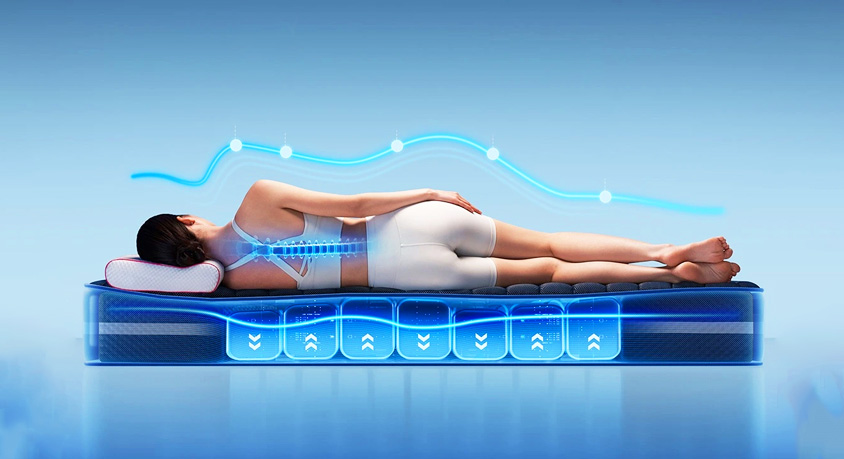
The technology operates on a simple, invasive principle: the mattress is a large, sensitive tactile membrane. Embedded grids of sensors—ballistocardiograph (BCG) sensors that detect heartbeats through body movement, precision temperature arrays, and pressure sensors—create a continuous data map of the sleep surface. Think of it not as a bed, but as a low-resolution, full-body scanner that is always on. The BCG sensors can distinguish between two different heart rhythms. The temperature zones map two distinct body heat signatures. The pressure sensors detect weight, movement, and crucially, the arrival or departure of a second person. The machine doesn't need a camera. It feels its way to a conclusion.
This creates a privacy paradox of unprecedented intimacy. You willingly share health data like heart rate with a fitness wearable. But the mattress infers data you never consented to share: your nightly routine of solitude or companionship, the regularity of a partner's visits, and even potential indicators of stress or intimacy based on correlated biometric spikes and movement. This "social rhythm" data is a byproduct of its primary function, yet it forms an intensely private behavioral fingerprint. The privacy policy you clicked through likely covers "sleep data" in broad terms, but does not explicitly forbid the aggregation and analysis of "co-occupancy" as a distinct data point used for service "improvement" or "personalization."
The risk is not that an employee is watching your data stream, but that this aggregated behavioral profile becomes a asset within the company's data ecosystem. Anonymized datasets of sleep patterns and co-sleeping frequency could be invaluable for health insurance risk modeling, relationship counseling service targeting, or even advertising for products from couples' resorts to solo living furniture. A data breach of such information would be uniquely damaging. Furthermore, in legal proceedings such as divorce or custody cases, a subpoena for this data could provide a court-admissible, timestamped log of private domestic life, all collected by a device billed as a sleep aid.
Your defense must be absolute, as the vulnerability is fundamental. Step one is pre-purchase inquiry. Before buying, demand from the manufacturer a detailed data flow map and a legally binding commitment that all biometric processing occurs locally on a device in your home, with no "social" or "co-occupancy" metadata ever transmitted to the cloud. If they cannot provide this, do not purchase. Step two is network isolation. If you own one, place the mattress and its hub on a dedicated, firewalled IoT network VLAN that has no internet access. This will cripple most smart features but preserve core functionality like temperature control while blocking all data exfiltration. Step three is regular data review and deletion. Use whatever data portal the company provides to download and then permanently delete your stored data weekly. This limits the historical profile available for aggregation or subpoena.
The smart mattress represents the final frontier of in-home surveillance: the privatization of rest. You cannot firewall your body while you sleep. Therefore, the only secure strategy is to firewall the data at its source. The value of perfect sleep climate is not worth the cost of a permanent, corporate-owned ledger of your most private habits. Treat any device that demands biometric data from a state of unconsciousness with maximum suspicion. Your priority is to ensure the machine serves you in your bedroom without reporting on you to the outside world. The only intelligence your mattress should have is the ability to keep you cool or warm. Everything else is a data leak waiting to happen. Configure it for isolation, or do not bring it into your home.
Disclaimer: Mention of any brand or trademark is for identification only and does not imply partnership or endorsement